Best Ethnic Wear for Women: Different Styles That Look Expensive But Aren't
There is something about a well-chosen ethnic outfit that just lands differently. You walk in, you feel put together, and people assume you spent a lot more than you did. That is the whole point. The best ethnic wear for women has never been about price tags. It has always been about fabric, fit, and the quiet confidence that comes from wearing something that actually suits the occasion.
This guide covers the styles worth knowing, the fabrics worth choosing, and the occasions where each one makes sense. Whether you are building your first ethnic wardrobe or refreshing one that has been sitting untouched for a season, this is a practical, honest breakdown.
A Quick Note on Sizing and Fit in Ethnic Wear
Sizing in ethnic wear follows its own logic and it is worth understanding before you shop, especially online.
Most ethnic suits and co-ord sets are designed with a slightly relaxed fit. This is intentional. The ease in the fit is what gives ethnic wear its characteristic drape and movement. A kurta that fits close to the body like a Western top loses some of that quality.
A few practical points:
-
Check shoulder width first. The shoulder seam of a kurta should sit at or just at the edge of your actual shoulder. If it falls further down your arm, the rest of the fit will look off regardless of the fabric.
-
Kurta length matters. Longer kurtas, ankle or floor-length, require a certain height to carry well. If you are on the shorter side, mid-thigh or hip-length kurtas with well-fitted bottoms tend to look more proportionate.
-
Bottom wear sizing. Salwars and palazzos are usually adjustable with drawstrings or elastic waists. Focus more on getting the length right. Most bottoms can be taken in slightly if needed.
-
When in doubt, size up. Ethnic wear that is slightly larger can be styled with a belt or worn in a relaxed way. Ethnic wear that is too small loses the drape that makes it worth wearing.
Most Vannya B sets run in sizes XS through 4XL, which covers a wide range. The product pages include size guides and fit descriptions that are worth reading before placing an order.
Why the Best Ethnic Wear for Women Looks Expensive
Before getting into specific styles, it helps to understand what actually makes ethnic wear look expensive. It is rarely the embroidery count or the number of embellishments. The pieces that get compliments tend to share a few things:
-
Fabric quality: Fabrics like Mul Chanderi, natural crepe, and pure linen drape well on the body. They move naturally, hold their structure, and photograph beautifully without extra effort.
-
Clean silhouettes: Well-cut kurtas, straight palazzo sets, and coordinated suits look put together because of their lines, not because of how much was spent decorating them.
-
Colour coherence: A set where the top, bottom, and dupatta are in the same colour family or are thoughtfully contrasted always reads as expensive, even when it is priced reasonably.
-
Occasion-appropriate styling: An outfit worn to the right event, in the right setting, always looks better than an over-dressed or under-dressed choice.
Keep these in mind as you read through the styles below.
Salwar Suit Sets: The Evergreen Choice for Every Calendar Event
Salwar suit sets for women are, without question, the most versatile category in ethnic dressing. They have been around long enough to carry cultural weight and have evolved enough to stay relevant every single season.
A salwar suit set usually includes a kurta or tunic top, salwar or bottom wear, and a dupatta. The range within this category is wide. You have everything from relaxed cotton fits for casual days to structured crepe sets for puja functions and family gatherings.
Where they work best:
-
Family get-togethers and Sunday lunches where you want to look nice without being overdressed
-
Religious functions and temple visits where covered, modest dressing is preferred
-
College or workplace ethnic day events where you want to look traditional but stay comfortable through the day
-
Relatives visiting from out of town, which always calls for something a bit more put-together than casuals
The reason salwar suit sets for women consistently deliver a premium look is that they are a complete outfit. There is no guesswork about what to pair with what. A well-chosen set walks out of the bag already looking like a decision was made.
At Vannya B, the suit sets span fabrics from Mul Chanderi to natural crepe to shimmer crush, with price points that sit well under what the outfits appear to cost. The Ritika Mul Chanderi Festive Suit Set, for instance, has handwork detailing and a dupatta included, the kind of outfit that draws questions about where you found it.
Mul Chanderi Suit Sets: The Fabric That Elevates Everything
If there is one fabric category that consistently punches above its weight in terms of appearance, it is Mul Chanderi. Mul Chanderi is a lightweight, semi-sheer fabric with a natural sheen. It drapes beautifully, feels cool on the skin, and carries embroidery or handwork in a way that looks deliberate and refined.

Mul Chanderi suit sets are the answer to a very specific wardrobe problem: how do you dress up for a festive occasion without wearing something heavy, hot, or uncomfortable?
The fabric is light enough to wear through a full evening without feeling suffocated, and the sheen gives it a festive quality that heavier fabrics achieve only through embellishment. Mul Chanderi does it through the fabric itself.
Occasions where Mul Chanderi suit sets make sense:
-
Festive events like Diwali, Navratri, Eid, and Onam where you want colour and grace without a heavy ensemble
-
Mehendi and haldi functions where the mood is celebratory but the dress code is a few steps below the wedding day itself
-
Naming ceremonies, first birthday parties, and intimate family functions
-
Evening get-togethers during festive months where everyone is dressed up but a saree feels like too much
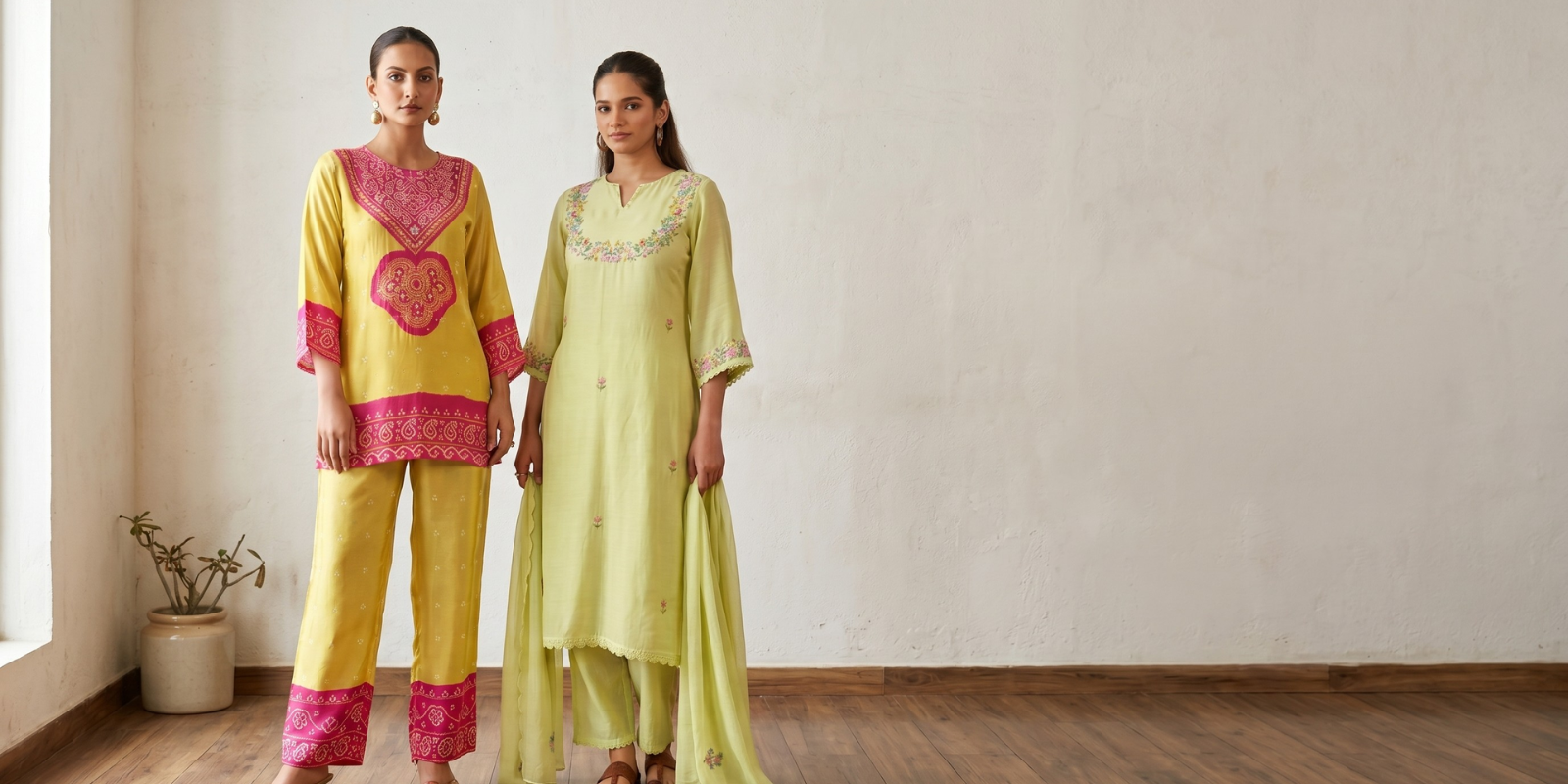
The Navika Peach Mul Chanderi Handwork Set and Myesha Light Green Mul Chanderi Handwork Set from Vannya B are good examples of what this fabric does at its best. The handwork detailing sits on the fabric cleanly, the colours are wearable across multiple occasions, and the silhouette is structured without being stiff.
This is what makes Mul Chanderi suit sets worth keeping in the wardrobe year-round.
Angrakha and Cape Sets: When You Want the Silhouette to Do the Work
Most ethnic wear conversations focus on fabric. Angrakha and cape sets are the exception. Here, the silhouette itself is the statement.

An angrakha is a kurta style where the front panel wraps across the body and ties at the side, creating a diagonal overlap at the chest. It is one of the oldest kurta silhouettes in Indian clothing and has seen a strong revival because it flatters almost every body shape. The wrap style cinches naturally at the waist without a belt, the neckline creates length, and the flare at the hem adds movement. It reads as traditional but the cut is genuinely flattering in a way that straight kurtas sometimes are not.
Cape sets take a different approach. A cape layer over a fitted kurta or top creates a layered look that photographs extremely well and feels elevated at evening events. The cape adds volume and drama without adding actual fabric weight on the body.
Where these silhouettes work best:
-
Angrakha sets for family dinners, festive evenings, and semi-formal occasions where you want something that looks intentional
-
Cape sets for evening parties, post-wedding functions, and events where you want a slightly dramatic, put-together look
-
Either style for women who want an ethnic silhouette that moves beyond the standard straight kurta format
At Vannya B, the Saanjh Mul Chanderi Angrakha Kurta Set and the Vihana Natural Crepe Embroidered Cape Set are worth looking at for this category. The angrakha in Mul Chanderi carries the wrap silhouette without adding stiffness, and the cape set has embroidery that sits well at an evening event without needing extra accessories to complete the look.
Ethnic Suit Sets for Women: Choosing Styles for the Right Moment
The term "ethnic suit set" covers a lot of ground. It includes everything from plain printed kurta sets to embroidered festive ensembles. The skill is in knowing which type belongs where.
Ethnic suit sets for women broadly fall into a few categories based on occasion:
Casual and everyday: Sets in linen, cotton, or printed natural crepe that are comfortable for daily wear, travel, or running errands in style. These tend to have simpler detailing, relaxed fits, and easy-care fabrics.
Semi-formal: Slightly more structured sets, often in crepe or chanderi, with tasteful embroidery or block prints. These work for office parties, daytime weddings, or visits to relatives on festive occasions.
Festive and celebratory: Richer fabrics, handwork, or embellished details. These are for Diwali parties, family functions during wedding seasons, or any event where you want the outfit to do some of the talking.
The mistake most people make is buying only one type and trying to stretch it across all three occasions. A Diwali-worthy embroidered suit set worn to a casual lunch reads as overdressed. A simple linen kurta set worn to a friend's sangeet reads as underprepared. Having a range across all three categories is how a wardrobe actually serves you.
Ethnic suit sets for women at Vannya B are designed with this in mind. The Prakriti Natural Crepe Embroidered Suit Set sits comfortably in the semi-formal space. The Kairavi Mul Chanderi Embroidered Suit Set moves easily into festive territory.
Ethnic Co-ord Sets for Women: The Modern Wardrobe Essential

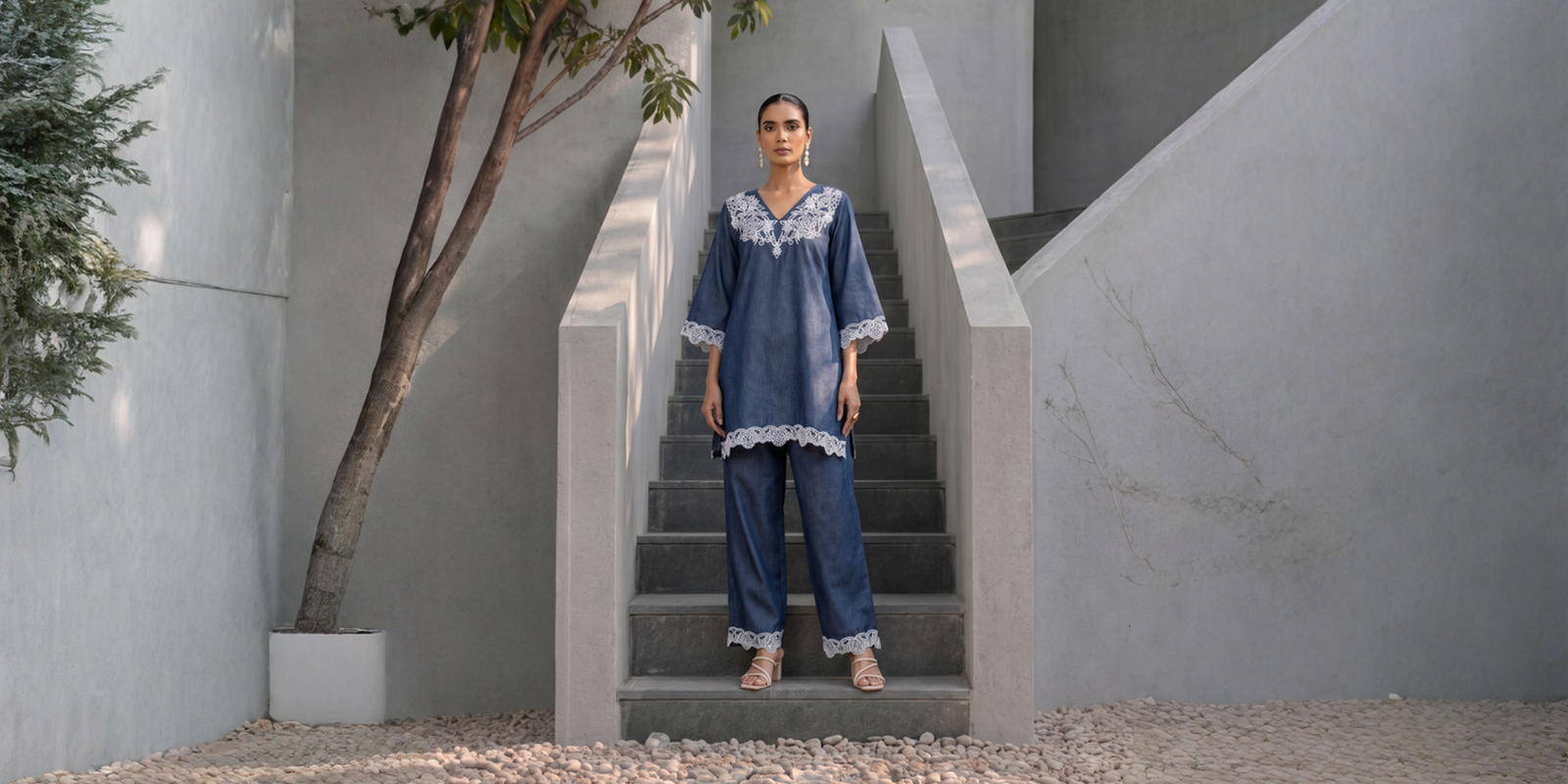
Co-ord sets are probably the most significant shift in Indian ethnic dressing over the last several years. An ethnic coord set for women is a coordinated two-piece set where the top and bottom are designed together, often in matching or complementary fabric, print, or colour, but styled in a more contemporary silhouette than a traditional salwar suit.
What makes them different from a regular suit set is the silhouette. Co-ord sets often feature:
-
Crop tops or short kurta tops paired with high-waist wide-leg pants
-
Straight-cut tops with flared or palazzo bottoms
-
Longline tops or tunics with fitted trousers
The result is an outfit that reads as both ethnic and contemporary, without leaning too hard into either direction.
Where ethnic coord sets for women work:
-
Birthday parties and weekend dinners where you want something that looks styled
-
Corporate events or farewell parties that call for something a step above casuals but still Indian in feel
-
Festivals like Navratri or Pongal where you want to wear ethnic wear but prefer something more modern in cut
-
Destination wedding pre-events where the dress code is "festive casual"
The Shuchi Natural Crepe Colour Block Co-ord Set and the Amrita Natural Crepe Dual-Tone Co-ord Set from Vannya B's collection are strong examples of how colour and fabric do the heavy lifting in a co-ord silhouette. The design is clean, the coordination is built in, and the result is an outfit that looks considered without requiring much effort.
An ethnic coord set for women is also one of the most flexible pieces in a wardrobe. The top can be worn with other bottoms, the bottom can be paired with a solid kurta. A set that travels well and works in multiple configurations is always worth the investment.
Summer Co-ord Sets for Women: Dressing Ethnic Without Overheating
Summer dressing in India is its own discipline. The heat means fabric choice is everything, and anything heavy or synthetic becomes unwearable by 10 AM. Summer co ord sets women reach for tend to prioritise breathability above everything else.
The fabrics that work best in summer:
-
Linen: Slightly textured, highly breathable, and with a natural look that is casual without being sloppy. Linen co-ord sets are ideal for daytime outings and casual festive occasions.
-
Natural crepe: Soft, lightweight, and with a drape that works in heat without clinging. Natural crepe co-ord sets move well and feel comfortable across long hours.
-
Mul Chanderi and chanderi: For occasions that need a slightly festive edge even in summer, these sheer-ish fabrics keep things light while looking elevated.
-
Cotton and pure cotton blends: For the most relaxed fits and the most breathable wear.
Summer occasions where co-ord sets are ideal:
-
Summer weddings and outdoor functions where you want to be comfortable in the heat
-
Daytime birthday parties, baby showers, or casual puja functions
-
Summer festivals and cultural events where ethnic dressing is preferred but the temperature demands lightness
-
Travel in summer where you want one outfit that handles multiple settings
At Vannya B, the Summer Soiree collection is built around exactly this. Summer co ord sets for women in linen prints like the Janya Green Linen Printed Set or the Keya White Linen Printed Set are designed to look fresh and refined without fighting the weather. The prints are clean, the fits are relaxed, and the overall result is ethnic dressing that makes sense in the actual Indian climate.
This is also a good category for women who find traditional ethnic wear too formal or heavy. Linen and crepe co-ord sets sit in a space between casual and festive that is genuinely useful.
Stylish Ethnic Wear for Women: Getting the Details Right
Stylish ethnic wear for women is less about wearing the most expensive thing in the room and more about wearing the right thing well. There are a few details that separate outfits that look expensive from ones that just look busy:
Fit: An outfit in an inexpensive fabric that fits well will always look better than a costly fabric worn in the wrong size. Ethnic wear in India tends to run a little loose by design, but the shoulder seam, kurta length, and bottom width should be proportionate to your frame.
Dupatta draping: A dupatta that is just tossed over the shoulder reads as an afterthought. Pinned neatly on one side, draped across the front, or styled with a brooch makes the same dupatta look intentional.
Footwear: Heeled kolhapuris, block heels, or simple juttis change how ethnic wear reads completely. The right footwear takes a casual kurta set into semi-formal territory.
Accessories: Less is usually more. A pair of statement jhumkas with a simple suit set does more than multiple layered necklaces. Let the outfit breathe.
Ironing and fabric care: This sounds obvious but it makes a real difference. A well-pressed outfit in a basic fabric looks far more expensive than a crumpled outfit in a premium one.

Stylish ethnic wear for women is also about knowing what you want the outfit to do. If it is for a regular Tuesday and you want to feel put-together without overdressing, a printed linen set with minimal jewellery does the job. If it is a Saturday evening function and you want to be noticed, a Mul Chanderi handwork set with statement earrings and heels earns that attention.
A note on dupatta styling specifically:
The dupatta is the most underused styling tool in ethnic dressing. Most women drape it once and forget about it. A few approaches that consistently look polished:
-
Single shoulder drape with a pin: Pin the dupatta on your left shoulder with a small brooch or saree pin. The rest falls naturally and looks deliberately styled.
-
Front drape, both sides equal: Bring the dupatta over both shoulders with equal length falling on each side in front. This works particularly well with embroidered or handwork suits where the dupatta has detailing worth showing.
-
Tucked at the waist: Tuck one end of the dupatta into your salwar or pant waistband on one side and let the rest fall freely. This is a more casual style that works well with printed sets.
-
Carried over the arm: For events where you want ease of movement, carry the dupatta folded over your forearm rather than pinned or draped. This works at cocktail-style functions.
The same dupatta styled four different ways creates four different looks from one outfit. This is one of the easiest ways to extend how much use you get from any ethnic suit set.
Best Ethnic Suits for Women: Fabrics Worth Knowing
The best ethnic suits for women are built on good fabric. Understanding what each fabric does helps you shop better and dress better:
Natural Crepe: A smooth, medium-weight fabric with a slight matte finish. It drapes well, holds embroidery cleanly, and feels comfortable in most climates. Natural crepe suits work across a wide range of occasions because they are neither too casual nor too formal. The Kavya Natural Crepe Embroidered Suit Set from Vannya B shows this fabric at its best. The embroidery sits well and the drape is clean without being stiff.
Mul Chanderi: Lightweight, semi-sheer, with a natural golden sheen. This is one of the best fabrics for festive wear because it looks rich without weighing you down. The best ethnic suits for women in Mul Chanderi include handwork and embroidery that sits gently on the fabric rather than pulling or bunching.
Linen: A breathable, slightly textured fabric that is ideal for casual and summer ethnic wear. Linen prints in block or digital have a relaxed, artisanal quality that looks expensive in a quiet way.
Shimmer Crush: A fabric with a metallic quality that catches light. Suits in shimmer crush are for evening events and celebrations where you want the outfit to have presence without going into full lehenga territory.
Viscose Chanderi: A slightly heavier chanderi variant with a softer, more structured drape. Good for set pieces that need to hold their shape through an event.
Pure Chiffon (Chinnon): A delicate, lightweight fabric with a subtle sheen and excellent drape. Ideal for embroidered suits where the fabric needs to carry the design without adding weight.
How to Check the Quality of Ethnic Wear Before You Buy
Shopping ethnic wear online means you rely entirely on product information and brand trust. Knowing what to look for saves you from outfits that photograph well but feel wrong the moment they arrive.
Fabric weight and texture: The product description should tell you the fabric name. Fabrics like Mul Chanderi, natural crepe, and pure linen have specific characteristics you can verify from the description. Mul Chanderi is lightweight and semi-sheer. Natural crepe has a smooth matte finish with a medium weight. Linen is textured and slightly stiff when new. If the description is vague and only says "ethnic fabric" or "premium material" without naming the actual fabric, that is worth noting.
Stitching and construction: On physical pieces, run your finger along the seams. Clean, even stitching with no loose threads at the hem or sleeve ends is a basic quality indicator. On embroidered sets, check whether the embroidery is flush with the fabric or bunching slightly underneath. Good handwork or machine embroidery sits flat and moves with the fabric. Poor quality embroidery pulls the fabric underneath it, creating small puckers visible when the piece is worn.
Colour consistency: In ethnic suits with dupattas, all three pieces should be from the same dye lot. A slight variation in shade between the kurta, bottom, and dupatta suggests pieces were not produced together or quality control was loose. This is easier to check on physical pieces but product images with all three pieces styled together give a reasonable indication.
Print alignment: In printed co-ord sets and suit sets, check whether the print at the side seams aligns across the front and back panels. A clean print match at the seams indicates careful cutting and construction. A print that does not align at the seam suggests the fabric was cut without care.
Dupatta quality: The dupatta is often where brands cut corners because buyers focus primarily on the kurta. Check the dupatta border for even finishing, consistent border width, and clean hemming at all four corners. On Mul Chanderi dupattas, the fabric should have an even sheen across the full length without patches of dullness.
Sizing information: A brand that provides detailed size charts with chest, waist, hip, and length measurements for each size is a brand that knows its product. Vague size guides with only S, M, L labels and no measurements make it harder to buy with confidence. Vannya B provides detailed sizing across XS to 4XL, which is a useful indicator of how seriously the brand approaches fit.
What to do after your order arrives: Open the package the same day. Check all three pieces together in natural light. Look at the colour match, the stitching at the hem and sleeve ends, and the embroidery if the piece has any. A brand with a clear return and exchange policy, which Vannya B has, makes this check less stressful because you have a clear path if something is off.
Dressing for Specific Occasions: A Quick Reference
Because occasion-appropriate dressing is often the gap between a well-dressed room and an awkward one, here is a direct breakdown:
Casual Outings, Brunches, and Weekend Plans: Printed linen co-ord sets, light crepe kurta sets, or simple two-piece ethnic coord sets. Keep jewellery minimal and footwear flat or block-heeled. The Nandini Natural Crepe Printed Co-ord Set or the Sharmila Linen V-Neck Co-ord Set from Vannya B fit this category well.
Family Functions and Home Pujas: Salwar suit sets in natural crepe or Mul Chanderi with a dupatta. Embroidery or handwork adds the right amount of occasion-appropriate detail. The Jeevika Mul Chanderi Festive Suit Set is a good reference point.
Festive Events (Diwali, Navratri, Eid, Onam): Mul Chanderi suit sets or ethnic co-ord sets in festive colours like peach, green, maroon, and gold. Handwork, embroidery, or printed motifs that reference the season. The Navika Peach Mul Chanderi Handwork Set and the Myesha Light Green Mul Chanderi Handwork Set are worth a look for this category.
Pre-Wedding Functions (Mehendi, Haldi, Sangeet): Bright colours, playful fabrics, and coordinated sets. Co-ord sets in festive prints or dual-tone combinations work well here. Heavier embroidery is better saved for the wedding day itself. The Amrita Natural Crepe Dual-Tone Co-ord Set or the Rishma Roman Chanderi Embroidered Co-ord Set are good options.
Semi-Formal and Office Events: Structured ethnic suit sets in muted or neutral tones. Embroidery should be tasteful and placed. The Nitya Natural Crepe Festive Suit Set or the Tarika Natural Crepe Embroidered Suit Set from Vannya B work well in this space.
Evening Parties and Dinners: Shimmer fabrics, angrakha-style sets, or cape sets that have a slightly dramatic quality. The Anandi Shimmer Crush Suit Set and the Vihana Natural Crepe Embroidered Cape Set are designed for evenings that call for something a step above the ordinary.
Summer Weddings and Outdoor Events: Linen or light crepe sets in fresh colours. Breathability is the priority and the outfit should hold up through outdoor hours without wilting. The linen printed sets from Vannya B's Summer Soiree collection are the right call here.
Ethnic Wear as a Gift: What to Choose and When

Ethnic suit sets are one of the most common gifted items in Indian households and there is a good reason for that. A well-chosen suit set is personal without being too personal, useful without being boring, and occasion-appropriate in a way that jewellery or home items are not.
When ethnic wear makes sense as a gift:
-
Wedding gifts for the bride's female relatives, where a festive suit set in a warm colour works better than something decorative
-
Diwali and Eid gifting, where a Mul Chanderi or embroidered suit set lands well for women of most ages
-
Birthday gifts for mothers, sisters, or close friends who enjoy ethnic dressing
-
Baby shower gifts for the mother-to-be, where a comfortable printed co-ord set in a soft colour is both practical and thoughtful
-
Housewarming gifts where you want something memorable rather than another kitchen accessory
What to keep in mind when gifting ethnic wear:
-
Opt for sets that include a dupatta so the outfit is complete and ready to wear
-
Choose colours that are versatile enough to be worn multiple times. Peach, sage green, off-white, and muted rose are safe choices across age groups.
-
Fabrics like Mul Chanderi and natural crepe tend to be well-received because they feel premium without being heavy
-
If you are unsure about size, most ethnic suits in a relaxed or semi-fitted silhouette accommodate a range of sizes comfortably. When in doubt, size up slightly.
Vannya B's festive suit sets, particularly the Mul Chanderi handwork range, are well-suited for gifting because the fabric and presentation read as considered. The price point sits at a range that feels generous without being excessive.
Building a Wardrobe That Actually Works
Most women who feel like they have nothing to wear actually have plenty of pieces. The issue is that they are mismatched and nothing coordinates well enough to create complete outfits on short notice. A well-built ethnic wardrobe solves this.
Here is a practical approach:
-
Two to three everyday sets: Casual linen or printed crepe suits or co-ords that you can reach for on any given day. These should be in colours you actually wear.
-
Two festive suits: Mul Chanderi or embroidered crepe suits in festive tones that cover Diwali, puja functions, and family gatherings. These should be versatile enough to be worn more than once a season.
-
One evening co-ord or cape set: For dinners, parties, and events that are a step up from casual. Something with fabric interest, like shimmer or a textured weave, works here.
-
One summer-specific set: A breathable linen or light cotton co-ord for the hottest months, designed to keep you comfortable without sacrificing the look.
This is a minimum. Most wardrobes benefit from having a bit more range, but this foundation covers most occasions without overlap or waste.
Caring for Your Ethnic Wear: What Each Fabric Needs
Buying good ethnic wear is only half the equation. How you care for it determines how long it keeps looking the way it did the first time you wore it.
Mul Chanderi: Hand wash in cold water with a mild detergent. Avoid wringing. Dry flat or hang loosely in shade. Iron on low heat from the reverse side. Mul Chanderi with handwork should be pressed very gently around the embroidery, ideally with a pressing cloth between the iron and the fabric.
Natural Crepe: Machine wash on a gentle cycle in cold water or hand wash. Crepe tends to hold its shape well but can stretch slightly if washed roughly. Dry flat and iron on a medium setting. Avoid high heat.
Linen: Linen can be hand washed or machine washed on a gentle cycle. It wrinkles easily, which is part of its natural texture, but a light iron on medium heat brings it back to a clean finish. Linen softens with each wash, so older linen pieces often drape better than new ones.
Shimmer Crush: Dry clean recommended for best results. If hand washing, use cold water and very minimal agitation. The metallic fibres in shimmer fabric can lose their quality with rough washing.
Chiffon and Chinnon: Hand wash only, cold water, minimal agitation. Lay flat to dry. These fabrics are delicate and can snag or pull easily if machine washed.
Storage: Store ethnic wear folded or hung, with the dupatta kept with the set so you can find it when you need it. Avoid storing embroidered pieces in plastic bags as the fabric needs to breathe. A cotton or muslin storage bag is better for pieces worn less frequently.
The Outfit That Works Is the One You Actually Wear
The women who dress well in ethnic wear share one habit: they pay attention to what the outfit is actually for. A beautiful Mul Chanderi set worn to a casual outing is wasted effort. The same set worn to a Diwali dinner is a perfect choice. The fabric, the silhouette, and the occasion working together are what create the impression of expense.
Good ethnic dressing has become more accessible. Fabrics like Mul Chanderi and natural crepe are available in ready-to-wear sets at prices that were once reserved for much simpler styles. The range at Vannya B is a sensible place to start exploring what works for your specific calendar, body, and sense of style.
Explore the full collection at vannyab.com and browse by occasion, fabric, or style.