Haldi Outfit Ideas For Women You Will Still Love When You Look Back At The Photos
There is something about Haldi ceremony photos that ages very differently from every other wedding function. The mehndi photos might look dated in five years. The cocktail look might feel too trend-specific. But a Haldi photo, when the outfit is right, has a way of staying timeless. The colour, the fabric, the softness of an afternoon ceremony. It all works together. And then you look at it ten years later and think, yes, that was exactly right.
The problem is that most Haldi outfit advice is written around one assumption: that yellow is the only correct answer, and that brighter always means better. Anyone who has worn a stiff, heavily embellished kurta to a Haldi ceremony knows how quickly that logic falls apart. You are going to be covered in turmeric paste within the first hour. You are going to sit on the floor, hug people, get splashed. The outfit has to move with you, breathe with you, and still look like something worth photographing.
This is where fabric actually matters, and where most women make a choice they later regret. Heavy fabrics like raw silk or polyester do nothing for you in the afternoon heat of a Haldi function. Light, naturally draping fabrics: mul chanderi, natural crepe, and linen. These photograph beautifully and feel wearable through everything a Haldi function throws at you.
Haldi Outfit Ideas For Women That Actually Make Sense For The Occasion
Before getting into specific outfit categories, it helps to separate two different situations. There is the Haldi outfit for the bride or the bride-to-be, and there is the Haldi outfit for the wedding guest or family member. They share some principles but have different priorities.
The bride's look is more considered. She often wants something in the traditional Haldi yellow or marigold family, something that reads celebratory in photos, and something that can handle the full turmeric treatment. The guest's look needs to be festive enough to fit the function while also being practical. She is likely moving around, helping, laughing loudly, and probably getting some haldi on herself anyway.
Both benefit from the same foundation: light fabric, a silhouette that works seated and standing, and a colour palette that photographs warmly in daylight.
Yellow Mul Chanderi: The Fabric That Was Made For This Ceremony
Mul chanderi is a handwoven fabric with a soft, semi-transparent quality. It has a natural sheen that is warm rather than flashy, and it drapes the way silk does but without the stiffness. In yellow, particularly the deeper turmeric or saffron yellows rather than the chalky or neon variants, it photographs like a dream in afternoon natural light. The weave catches light softly, which means you look luminous in photos rather than washed out.

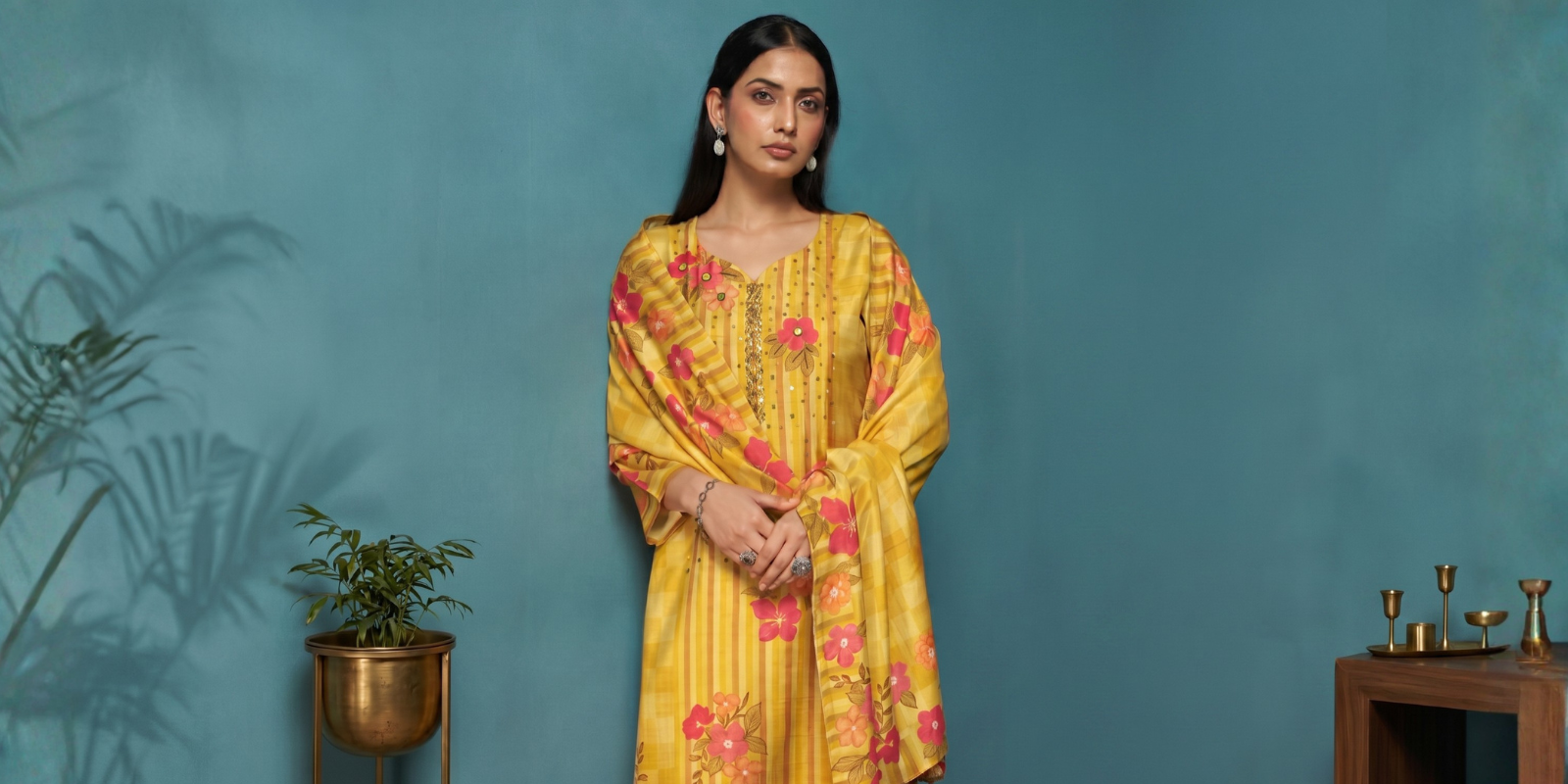
The Ritika Mul Chanderi Festive Suit Set is exactly what this fabric category should look like for a Haldi function. The yellow is warm and saturated, the multi-colour hand embroidery around the neckline adds enough detail to feel celebratory, and the 3/4th sleeve with round neckline is flattering without being fussy. The dupatta adds the traditional layer for the ceremony without making the outfit heavy. It sits in the casual celebration territory, which is where a Haldi function sits when it is done right.
What makes mul chanderi particularly suited to this occasion is that it gives even when you move. A fabric that pulls or rides up during a ceremony you are meant to be present and joyful in is a distraction. Mul chanderi stays put, drapes naturally, and asks nothing of you while you are wearing it.
The Suit For Haldi Function: Structure Meets Softness
A well-constructed three-piece suit set is one of the most versatile Haldi outfits because it gives you ceremony-appropriate coverage, the dupatta for the ritual moments, and a silhouette that works across different body types. The key is choosing a suit where the construction is soft rather than structured. No interfacing, no stiff collars, no fabrics that fight against movement.
Natural crepe is worth knowing here. It is a matte fabric with a smooth hand and a fluid fall. Because it takes dye well, it is available in the full Haldi colour palette: turmeric yellow, marigold orange, peacock green, and the softer mustards that photograph beautifully next to marigold garlands. It is also machine-washable in most cases, which matters when you are wearing something to a ceremony that involves rubbing turmeric paste on people.

For women who want a suit for Haldi function with a bit more presence than a simple kurta, the Nitya Natural Crepe Festive Suit Set is a strong choice. The festive construction with natural crepe fabric balances the celebratory quality of the occasion with a silhouette that stays clean in photographs. It reads formal enough for a wedding function without feeling overdressed for an afternoon ceremony that takes place outdoors or in an open courtyard.
When picking a suit for a Haldi function, pay attention to the bottom. A palazzo or straight salwar in a complementary colour gives more flexibility than a churidar if the ceremony involves sitting on the floor. The waist elastic on a palazzo is also more forgiving than a fixed waistband when you are eating ceremony food, moving around for photos, and hugging everyone in the family.
Haldi Co Ord Set For Women: The Case For Less Ceremony
There is a real argument to be made that a haldi co ord set for women works better at a Haldi function than a full three-piece suit set with dupatta. A co ord set, where the kurta or top and the bottom are designed as a matching pair, removes the dupatta variable. The dupatta variable disappears entirely during a ceremony where things are already a little chaotic. The look is complete on its own, reads festive, and gives you full freedom of movement.

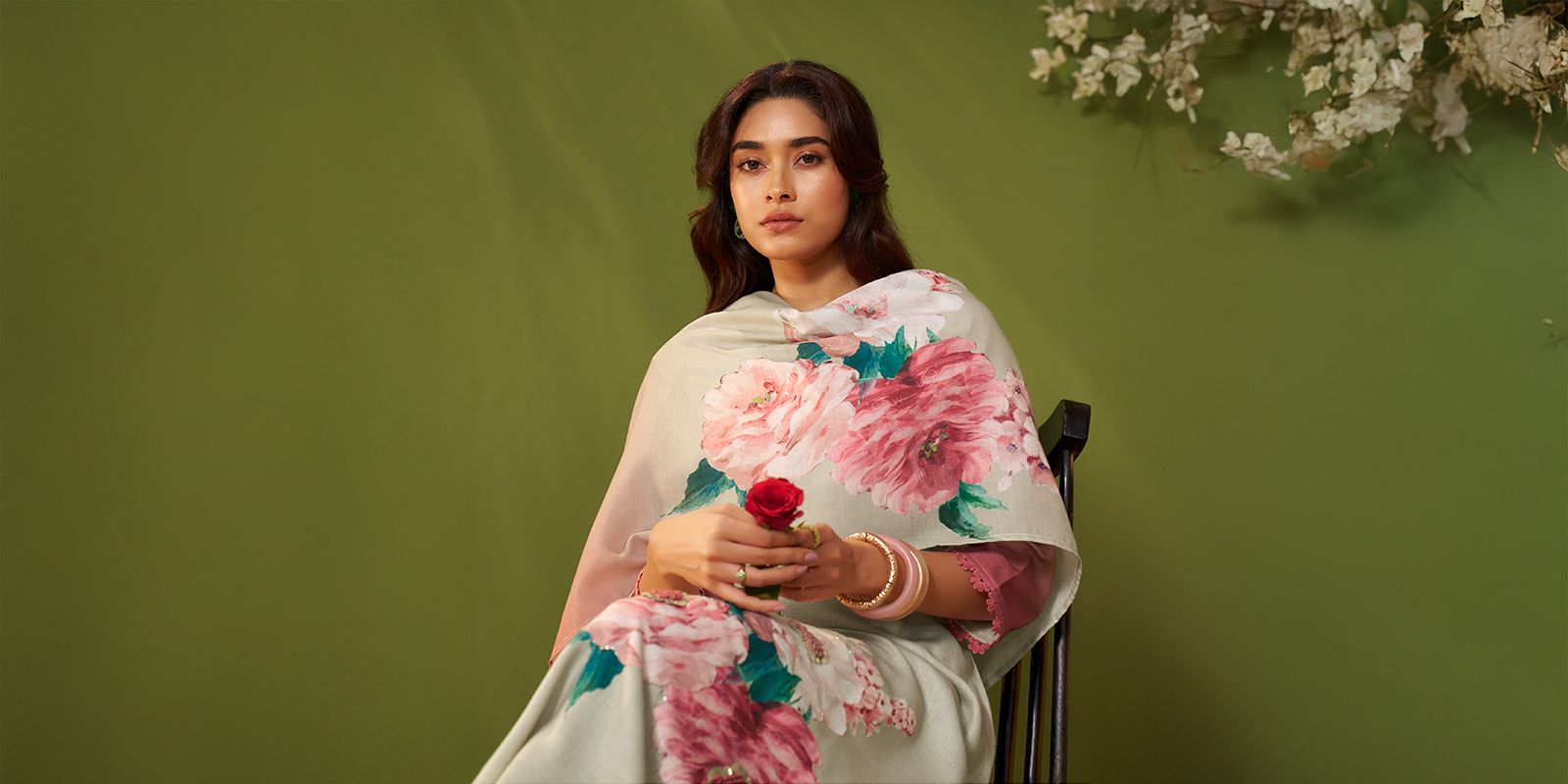
Mehak Pink Vatican Silk Co-ord Set is a strong options for this purpose. The Mehak has a printed quality that reads cheerful and occasion-appropriate. It's dual-tone construction gives a more considered, put-together look without any extra styling effort. The colour play does the work for you.
For the yellow co ord set for women version of this, the principle is the same. A yellow or marigold co ord set in a light fabric photographs beautifully at a Haldi ceremony, gives full movement, and requires minimal styling. A pair of gold jhumkas and embellished juttis is all the accessory work you need.
If you do want a dupatta, it can be added back as an optional layer for the ritual moments and removed when you want to move freely.
Haldi Suits Online: What To Look For Before You Order
The online shopping experience for ethnic wear often fails people at the colour step. A yellow that looks warm and turmeric-toned on a screen can arrive looking more washed out or neon than expected. A few things help here.
First, look for fabric descriptions that include the word "mul" or "chanderi" or "natural crepe." These are all fabrics with a natural base that read true to colour in photographs. Polyester and pure synthetic fabrics often have a slightly artificial quality in daylight photos, which is the primary light condition of a Haldi ceremony.
Second, look at how the product is photographed. If the brand uses natural light photography and you can see the fabric drape clearly, that is a more accurate representation than a heavily edited studio shot on a white background.
Third, read the occasion label. Products marked for "casual celebration" or "festive occasion" are generally calibrated for exactly the Haldi context. A product marked "party wear" or "evening wear" often skews heavier or more embellished than you want for an afternoon ceremony.

When searching for Haldi suits online, prioritize brands that describe their fabrics specifically. "Mul chanderi" is a specific thing. "Chanderi" is a specific thing. "Soft fabric" or "flowy material" tells you very little and is often a signal that the brand prefers to leave the fabric quality vague.
Women's Haldi Outfit Ideas By Role At The Ceremony
The function you play at a Haldi ceremony genuinely affects what you should wear. Here is how to think about it.
If you are the bride:
-
Full yellow or marigold is correct and looks right in photos
-
Mul chanderi or natural crepe in a three-piece set gives you the ceremonial feel with the comfort you need
-
Hand embroidery in complementary thread colours (orange, green, gold) photographs beautifully against yellow fabric
-
A round neckline or sweetheart neckline in a kurta top gives more visual interest than a plain neckline
-
Skip heavy dupatta fabric. A mul chanderi or tissue dupatta in a complementary colour keeps the look airy
If you are the bride's mother or mother-in-law:
-
Deeper yellows, mustards, and mango shades are more appropriate than a bride-matching bright yellow
-
A suit set with a longer kurta silhouette reads appropriately senior without being stiff
-
Natural crepe in a printed style gives a festive quality that works for the ceremony context
If you are a bridesmaid or close friend of the bride:
-
A yellow print suit or yellow co ord set in a slightly different shade from the bride's outfit creates a beautiful coordinated look in group photographs
-
Marigold, saffron, and mango shades all work well and photograph warmly together
-
Keeping to lighter fabrics means you can stay comfortable and present through the full ceremony
If you are a wedding guest attending the Haldi:
-
The Haldi outfit for wedding guest works best when it sits within the yellow-orange-green family without directly competing with the bride's look
-
A printed or floral co ord set in natural crepe, or a simple suit in a warm mid-yellow, fits the occasion without being overdressed
-
Avoid heavily embellished outfits. They are out of register for the casual, joyful tone of a Haldi function
The Yellow Print Suit: A Pattern Argument
There is a divide in how women approach the yellow print suit for a Haldi function. Some want a solid yellow because they feel it photographs more cleanly. Others find that a print within the yellow and orange family adds depth and interest to photos that a flat solid colour sometimes lacks.
Both are defensible. The solid yellow reads more traditional and ceremonial. A yellow print suit with florals, block print motifs, or abstract prints reads more relaxed and personal.
The print route works particularly well for guests who want to be dressed appropriately for the ceremony without looking like they are trying to compete with the bride's solid-yellow celebration look. A small to medium scale print in a yellow base with green or orange motifs gives enough visual interest for photos while keeping the overall palette within the Haldi colour story.
The fabric matters more than whether the print is there. A yellow print suit in natural crepe or linen will always photograph better than one in a synthetic fabric, regardless of how good the print looks on the screen.
Haldi Outfit Ideas That Work For A Wedding Guest Visiting Multiple Functions
One practical thing most outfit advice skips over: many wedding guests attend three or four functions, sometimes across consecutive days. The Haldi is often one of those. Building your Haldi outfit around a piece that can be restyled for a different function saves both money and wardrobe stress.
A yellow co ord set for women with enough versatility beyond the ceremony can often be restyled for a daytime mehendi or a house puja with a different dupatta and different jewellery. The kurta from a three-piece suit set can sometimes be worn with different bottoms for a separate occasion.
This is where the modular quality of Indian ethnic wear is genuinely useful. If you are buying a piece specifically for a Haldi function, think about whether the silhouette and colour could work elsewhere. A warm mustard or mango yellow sits more easily across multiple contexts than a very bright turmeric yellow, which can read very ceremony-specific.
What To Keep Simple: Jewellery And Accessories

A Haldi outfit for women should almost never be styled with heavy or precious jewellery. The ceremony involves water, turmeric paste, and a lot of physical contact. Gold jhumkas are fine. They are the traditional choice and they look right in photos. Oxidised silver works well with printed or earthy-toned outfits. Pearl drops are appropriate if the outfit leans more formal.
What to skip: necklaces that are heavy enough to catch or tangle, bangles in large quantities that will be in the way throughout the ceremony, and statement rings that could get damaged.
Footwear follows the same logic. Embellished juttis are the standard Haldi choice because they are comfortable, look right with both suits and co ord sets, and can handle the informal ground conditions of a Haldi ceremony. Block heels work if the venue is indoors and level. Stilettos are a consistent mistake in Haldi photos for reasons that require no elaboration.
Fabrics To Carry Into The Haldi And Fabrics To Leave At Home
One genuinely useful framework for deciding what to wear.
Fabrics that work:
-
Mul chanderi: light, naturally draping, warm sheen in photographs, handles casual wear extremely well
-
Natural crepe: matte finish, fluid fall, comfortable in heat, machine washable in most cases
-
Linen: textured and casual, good for daytime ceremonies, works in printed and solid forms
-
Viscose chanderi: slightly heavier than mul chanderi but still very light, takes prints beautifully
Fabrics to think twice about:
-
Pure silk: heavy, traps heat in the afternoon, wrinkles under physical wear
-
Net or mesh fabrics: can snag on marigold garlands and ceremony elements
-
Georgette: can be fine but synthetic georgette photographs cooler in tone than natural fabrics
-
Heavy embroidery all over: the weight adds up quickly and competes with the ceremony rather than complimenting it
The best Haldi outfits have one thing in common: you forget you are wearing them within twenty minutes of arriving at the ceremony. That is the target. Outfit choices that demand attention or adjustments throughout the function take you out of the moments that become the photographs you look back at for years.
Colours That Work Just As Well As Yellow At A Haldi — And The Case For Wearing Them
Yellow became the Haldi colour default because turmeric is yellow. That logic made complete sense when the ceremony was a private family ritual held in a courtyard. In 2026, the Haldi function is a photographed event with a guest list, a decorator, and a colour palette. The assumption that everyone must wear yellow has quietly stopped making sense, and the women who figured this out earlier are the ones with the more interesting Haldi photos.
The ceremony itself sets the visual tone. Marigold garlands, banana leaves, clay diyas, terracotta platters, and the warm gold of the turmeric paste are already doing enormous work in every frame. An outfit in yellow can disappear into that backdrop rather than stand out from it. A woman in peacock green or deep saffron orange against a marigold backdrop photographs with far more visual clarity than one whose outfit blends into the flower arrangements.
Here is how the alternatives actually perform:
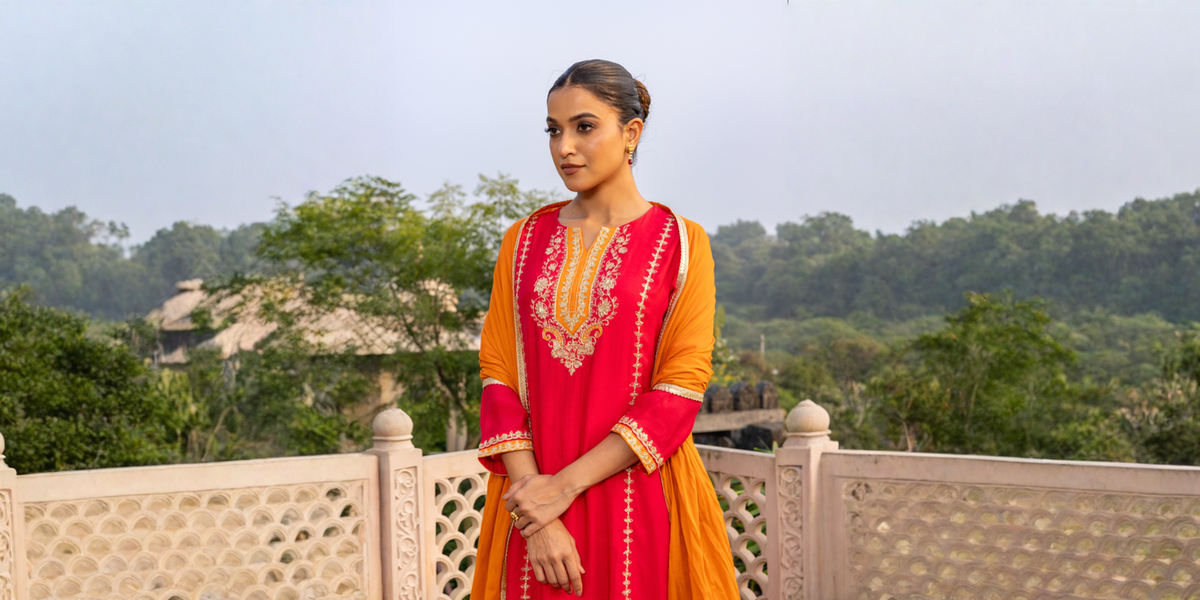
Marigold orange sits so close to yellow in the ceremony colour story that it reads as completely appropriate while giving you a shade that is richer and more distinctive in photographs. It works particularly well for the bride's mother or close family members who want to feel connected to the colour story without wearing the same shade as the bride.
Peacock green is the strongest contrasting choice available at a Haldi. Against the yellow and orange of marigold decorations, it photographs cleanly and creates the kind of colour separation that makes group photos feel deliberately composed rather than accidental. A natural crepe or mul chanderi piece in peacock green reads festive without any effort.
Mustard is the more considered version of yellow. It has depth that bright turmeric yellow lacks, it ages better in photos, and it reads as a deliberate choice rather than a default. Women who want to stay within the yellow family but want their outfit to feel more intentional tend to land here.
Ivory and off-white with yellow or gold embroidery has become a real choice for brides who want a softer look at their own Haldi. The contrast between the pale base and the turmeric paste being applied is actually more visually striking in photos than a yellow-on-yellow situation. It also gives the embroidery and handwork on the garment more room to show.
Warm terracotta and mango sit within the earthy palette that the Haldi ceremony naturally creates. These shades photograph with the same warmth as yellow but carry a distinctly different personality, more grounded and personal.
The colours that genuinely do not serve a Haldi context are the cool-toned ones. Icy blues, lavender, silver, and sharp whites read disconnected from the ceremony palette in photographs. They can look beautiful on their own but they create a visible register mismatch in the same frame as marigolds and turmeric.
The question to ask when choosing a Haldi outfit colour is simple: does this shade exist somewhere in the physical ceremony space? Marigolds, banana leaves, diyas, sandalwood, turmeric paste, earth tones. If the answer is yes, the colour belongs. Yellow is one correct answer. It has never been the only one.
Frequently Asked Questions About Haldi Outfits For Women
What colour is appropriate for a Haldi function?
Yellow in its various shades, turmeric, saffron, marigold, mustard, is the most traditional Haldi colour. Peacock green and marigold orange are also commonly worn and photograph well in the ceremony setting. The warm colour family photographs most harmoniously with the marigold decorations and natural light typical of afternoon Haldi functions.
Can I wear a co ord set to a Haldi ceremony?
A haldi co ord set for women is one of the most practical outfit choices for this function. The dupatta-free format gives you full freedom of movement during the ceremony, and a well-made co ord set in mul chanderi or natural crepe reads festive and occasion-appropriate. It also photographs cleanly, which matters for a ceremony with this many photos.
What fabric is best for a Haldi outfit?
Mul chanderi and natural crepe are the most consistently recommended fabrics for Haldi outfits. Both are light, breathe well in afternoon heat, and drape naturally in photographs. Linen is a good alternative for daytime ceremonies. Heavy fabrics like raw silk or stiff cotton are better suited to evening functions.
Is a suit or a co ord set more appropriate for a Haldi function?
Both work well. A suit for Haldi function with a dupatta feels more traditional and ceremonial. A co ord set gives more freedom of movement and is easier to manage through an active ceremony. The decision often comes down to personal preference and the formality of the specific Haldi event. Larger, more traditional families often prefer the three-piece suit format. More intimate, contemporary Haldi ceremonies often see guests in co ord sets.
How should I style a women's Haldi outfit?
Keep jewellery light: gold or oxidised silver jhumkas, a simple bracelet, and embellished juttis as footwear. Avoid heavy necklaces or large bangles that could be cumbersome during the ceremony. Hair in a loose braid or bun works well because it stays out of the way and photographs beautifully with the natural, joyful aesthetic of a Haldi function.