What Is Mul Chanderi Fabric & Why It's Perfect for Every Season in India
Every fabric has a personality. Some fabrics are performers: they look incredible in photographs but demand something from you all day. Others are workhorses. Comfortable, practical, completely forgettable. Very few fabrics are both: genuinely beautiful and genuinely kind to the body.
Mul Chanderi is one of those rare ones.
At Vannya B, we have built a large part of our collection around Mul Chanderi, and the choice was deliberate. When we sit down to design a new suit set or co ord set, the first question we ask is whether the outfit will carry a woman through her actual day. A wedding that starts at noon and ends at midnight, a Diwali evening that moves between the puja room and the terrace dinner, a mehendi function in May where the heat is real and the hours are long. The fabric has to earn its place. Mul Chanderi earns it every time.
Here is what this fabric actually is, why we keep choosing it, and how to wear it across every season and occasion that matters in an Indian wardrobe.
What Is Mul Chanderi Fabric? The Fabric Behind the Feeling
The name tells you most of what you need to know. Mul comes from MulMul, the Hindi word for a specific class of open-weave cotton muslin that has been woven across the subcontinent for centuries. Light, airy, breathable, with a construction that allows air to pass through rather than trap it. Chanderi refers to the weaving tradition from Chanderi in Madhya Pradesh, a small town with over seven hundred years of textile heritage, where weavers developed a fabric that blends silk and cotton into something that carries both the sheen of silk and the accessibility of cotton.
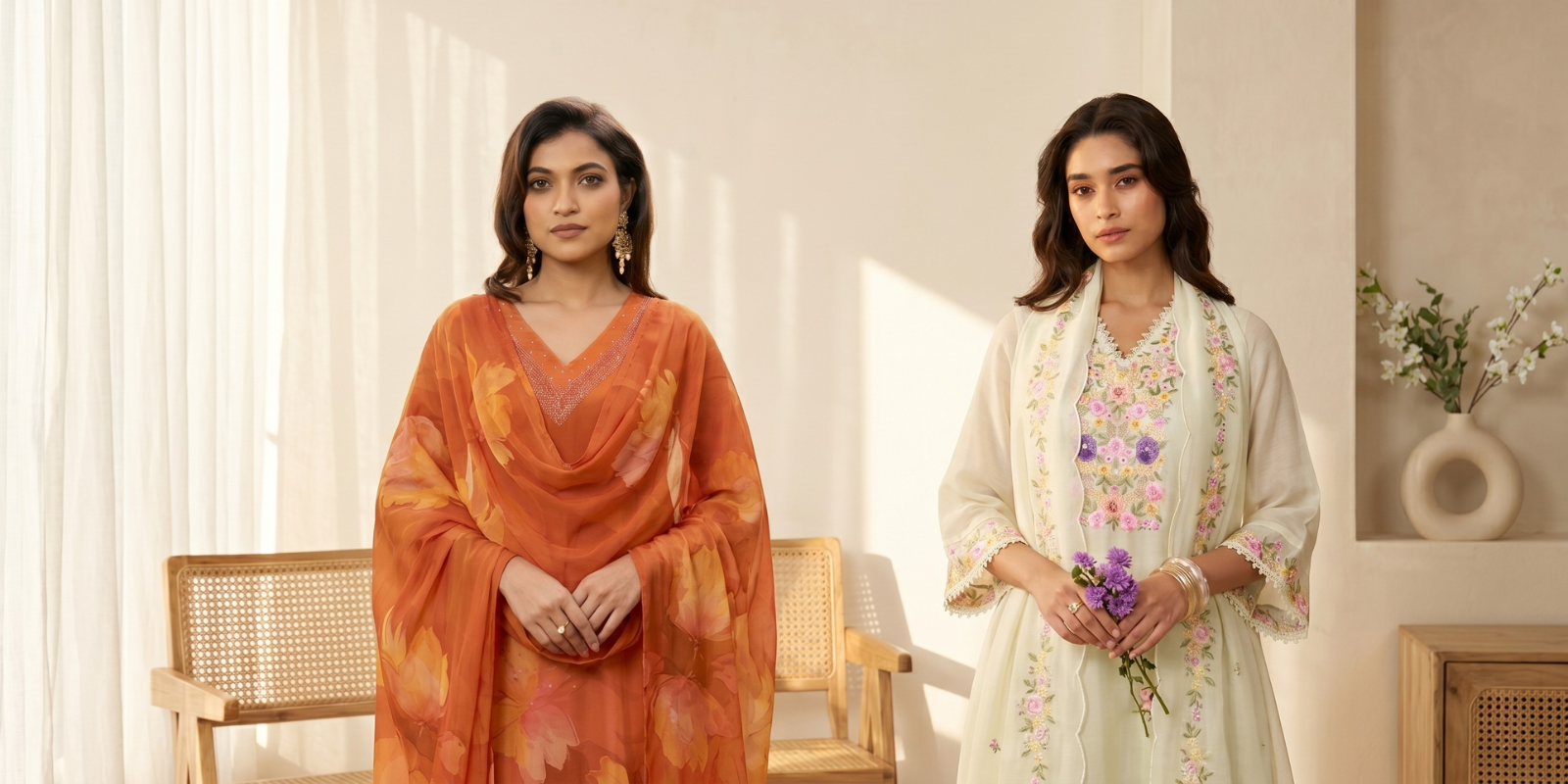
Mul Chanderi is what happens when you apply the MulMul weave philosophy to Chanderi. The result is a fabric that is genuinely light. It is lighter than regular Chanderi, which uses a closer weave and carries more structure. It drapes in soft, relaxed folds. It holds a natural lustre from the silk content without looking heavy or formal. And it breathes in the way that Indian women actually need their festive fabric to breathe.
The Chanderi weaving tradition holds a Geographic Indication tag from the Government of India, which means authentic Chanderi fabric can only be produced in and around the Chanderi region of Madhya Pradesh. This matters beyond heritage sentiment. The GI tag is a quality guarantee. Fabric sold as Chanderi without this provenance is an imitation, often woven in synthetic blends or on power looms rather than the handlooms that give genuine mul chanderi its characteristic weight, drape, and sheen. When we source mul chanderi for our collection, we work from this standard. The fabric you receive in a Vannya B piece is the real thing.
The three Chanderi fabric properties that matter most when you are choosing between fabrics:
-
The weave. Mul Chanderi uses a deliberately open, loose weave. This is where the lightness comes from. The construction is airy by design, which is what gives the fabric its signature floaty quality. When you hold a Mul Chanderi suit set and it feels almost weightless, that is the weave working exactly as it should.
-
The sheen. Mul Chanderi carries a soft, natural lustre from its silk content. This is different from synthetic shine. It is subtle and warm rather than flat and reflective. Under daylight, it glows quietly. Under artificial festive lighting, it comes fully alive.
-
The drape. This fabric falls beautifully. A well-cut Mul Chanderi kurta set for women drapes over the body in fluid, gentle folds. It falls away from the body. It moves with the wearer rather than against her.
Plain Chanderi and Mul Chanderi are close relatives, but the difference matters for wearability. Regular Chanderi has a closer weave and a slightly crisper hand. Mul Chanderi, with its MulMul-inspired construction, is softer, lighter, and far more forgiving in warm or humid conditions. For Indian weather and Indian occasion schedules, that difference is significant.
Why We Choose Mul Chanderi: A Designer's Perspective
We talk a lot internally about the difference between a fabric that looks good and a fabric that does its job. These are related but separate things. A fabric that photographs beautifully but becomes stiff by evening has failed. A fabric that breathes well but cannot hold embroidery has also failed. The fabric we reach for has to pass on both counts.
Mul Chanderi passes on both counts. Here is how we think about it from a design standpoint.
It takes embroidery without losing itself. This is the quality we value most. We work with hand embroidery, thread work, and gota patti across many of our Mul Chanderi pieces. The challenge with embellished ethnic wear is that heavy fabrics become rigid once embroidered, while lighter fabrics often cannot hold the weight of the work without puckering. Mul Chanderi sits in the precise middle. It accepts the embroidery cleanly and still drapes softly after. The Kairavi Mul Chanderi Embroidered Suit Set and the Purnima Mul Chanderi Embroidered Suit Set are both examples of this: heavily worked pieces where the fabric remains fluid, the silhouette stays soft, and the hand embroidery sits exactly where it should.
It breathes through the occasions that matter. Indian celebrations are long. A Diwali evening, a wedding sangeet, a Navratri garba night. These are Multi-hour occasions where you are on your feet, dancing, greeting guests, sitting cross-legged for rituals, moving between rooms and terraces and mandaps. A fabric that becomes a problem by hour three was the wrong choice from the start. Mul Chanderi stays comfortable across the full duration. The open weave allows air circulation, the light weight reduces physical fatigue, and the fabric releases heat rather than trapping it.
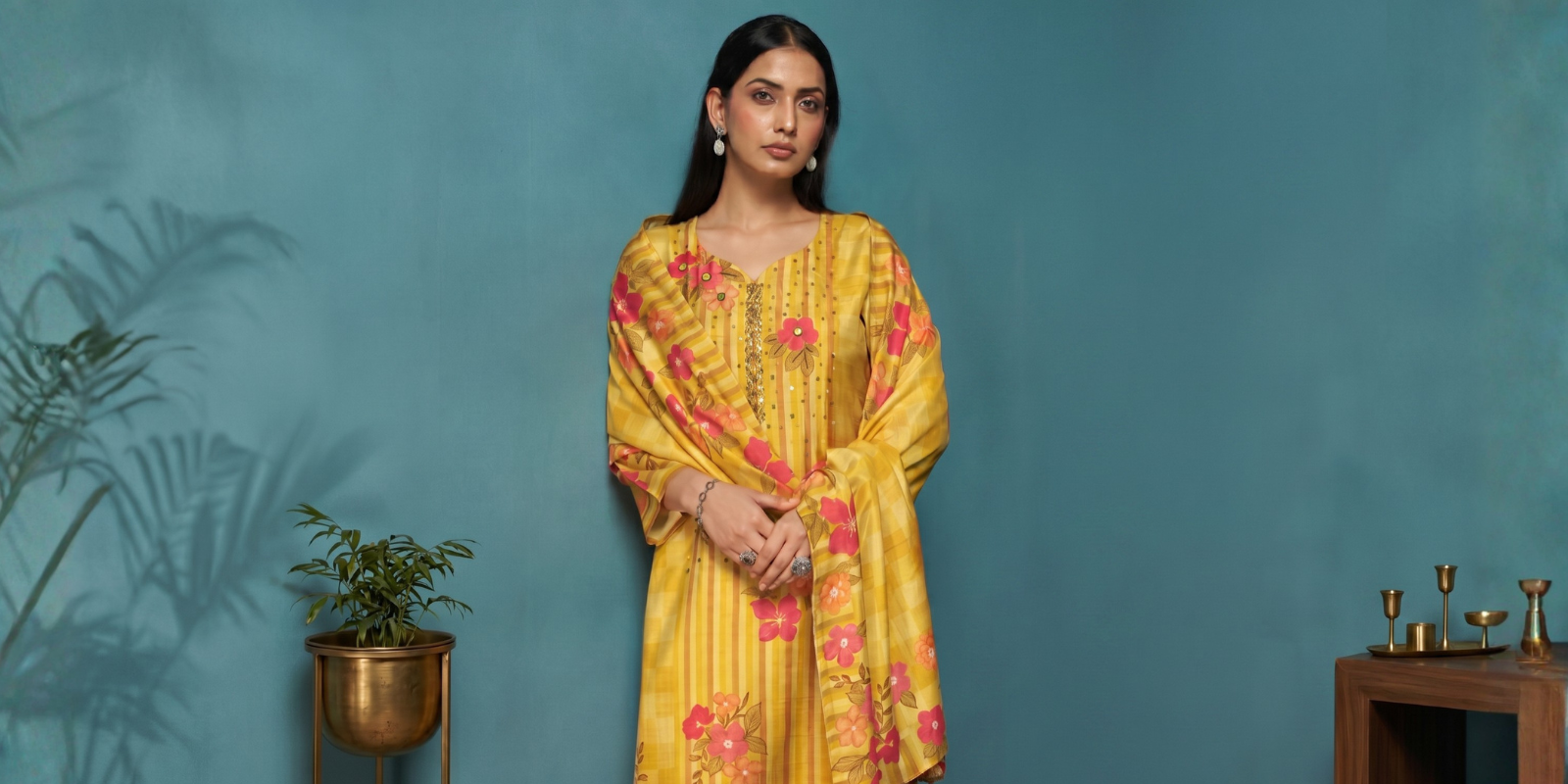
It holds colour the way festive fabric should. The silk content in Mul Chanderi intensifies dye in a very particular way. Colours come out rich and saturated, and the sheen of the fabric makes them luminous rather than flat. A maroon Mul Chanderi suit set in festive lighting looks like it is lit from within. The colour has depth. The Advika Maroon Mul Chanderi Suit Set and the Sona Purple Mul Chanderi Suit Set in our current collection demonstrate this clearly. The depth of colour comes directly from the fabric itself, amplified by the natural sheen.
It respects the craft behind it. Mul Chanderi is a handwoven fabric made by skilled artisans in the Chanderi weaving tradition. When we choose to build a significant part of our collection in Mul Chanderi, we are also making a choice about what kind of design practice we want to be. We want our pieces to carry real craft. The fabric does that without us having to try.
Mul Chanderi vs Other Fabrics: How It Actually Compares
When women come to us asking about mul chanderi, the real question behind the question is usually: how does it compare to what I already know? Here is our honest read on the fabrics we are most often asked to compare it against.
Mul chanderi vs regular chanderi. Regular chanderi uses a closer weave and has a slightly crisper hand. It holds structure better and works well for silhouettes that need more body, like an Anarkali with a stiff flare or a kurta where you want the fabric to stand rather than fall. Mul chanderi is softer, lighter, and more forgiving in heat. For a three-piece suit set you will wear across an entire celebration day, mul chanderi is the more wearable choice. For a piece where you want the fabric to carry its own silhouette, regular chanderi has the edge.
Mul chanderi vs georgette. Georgette is a popular festive fabric, largely because it drapes well and is widely available. The difference in feel is significant. Georgette, particularly synthetic georgette, does breathe poorly. It holds heat close to the body. In humid weather it clings. Mul chanderi does none of these things. The natural fibre composition means it releases heat and moisture rather than trapping them. For women in Hyderabad, Chennai, or Mumbai navigating festive seasons in warm or humid conditions, the difference between wearing mul chanderi and synthetic georgette across a five-hour occasion is very real.
Mul chanderi vs pure silk. Pure silk is richer and more formally festive than mul chanderi. For a heavy evening reception or a very formal occasion, pure silk carries that weight of occasion. For everything else, mul chanderi is more practical: significantly lighter, far easier to manage through a day of movement, and it washes more forgivingly. The sheen of mul chanderi is quieter than silk. It reads warm rather than high-gloss, and that quality actually reads better in daylight and in photographs taken under natural light.
Mul chanderi vs linen. Linen and mul chanderi are often chosen for overlapping reasons. Both breathe well, both work in warm weather, both suit daytime occasions. The difference is in the finish. Linen is matte and textured with a casual, earthy quality that suits informal and semi-casual occasions. Mul chanderi carries a soft sheen and a more refined drape that reads as festive even in clean, simple silhouettes. We work with both fabrics at Vannya B. Linen for everyday and casual occasion sets. Mul chanderi for pieces that need to carry a celebratory occasion without the formality of heavier fabrics.
Mul Chanderi Across Every Indian Season: An All Season Fabric That Actually Earns the Title
The phrase "all season fabric" gets used casually in fashion. Most of the time it is marketing shorthand that falls apart at first contact with an Indian summer. Mul Chanderi is genuinely different in this regard, and understanding why requires understanding what each Indian season actually demands from clothing.
Summer, March to June. This is the season that eliminates most festive fabrics from consideration. In cities like Hyderabad, Delhi, or Ahmedabad, temperatures cross 40 degrees and stay there for weeks. The festive calendar continues regardless. Summer brings its own weddings, its own family occasions, its own religious ceremonies. The fabric you choose for a May wedding or a June puja has to keep the body cool, dry quickly, and look appropriately dressed-up without adding to physical discomfort.
Mul Chanderi does all three. The open weave allows air to move close to the skin. The light weight keeps the thermal load low. The natural sheen means that even a lighter-coloured, minimal Mul Chanderi kurta set for women in ivory or pale sage reads as festive and intentional. The Komal White Mul Chanderi Suit Set and the Inaya Grey Mul Chanderi Handwork Set from our collection are exactly the kind of pieces we had summer occasions in mind for. Light colours, clean silhouettes, embroidery that adds detail without adding bulk.
Monsoon, July to September. The challenge of the monsoon is humidity, and humidity is where most festive fabrics fail quietly and uncomfortably. Silk absorbs moisture and takes forever to dry. Georgette clings. Heavier cotton blends become heavy in a different, worse sense of the word. Mul Chanderi, because of its open weave and silk-cotton composition, releases moisture rather than holding it. It dries faster than most alternatives. For festivals that fall in the monsoon months, Teej, Janmashtami, Ganesh Chaturthi, Onam. A Mul Chanderi suit set or a Chanderi co ord set in jewel tones, deep teal, burnt orange, mustard, berry, gives the festive richness the occasion needs while staying physically manageable through a humid evening.
Winter, October to February. This is Mul Chanderi at its most naturally festive. The October-to-February window in India is when everything happens: Navratri, Dussehra, Diwali, the entire wedding season, Christmas and New Year celebrations. The social calendar is dense and demanding. Mul Chanderi carries this weight beautifully. The fabric layers well. A light dupatta or a fine wool stole is enough for mild evenings, and for warmer parts of India like Hyderabad and the southern coastal cities, Mul Chanderi works without any layering at all. The colour palette that reads best in winter, deep maroon, plum, forest green, rich saffron, suits the fabric's natural depth and warmth perfectly.
Mul Chanderi by Occasion: Wearing It Right
Because Mul Chanderi spans such a wide range of formality depending on how it is cut and embellished, the occasion genuinely dictates how you wear it rather than whether you wear it.
Everyday and Office Ethnic Wear
A Mul Chanderi kurta set for women in a simple silhouette, clean cut, solid colour or small print, minimal embellishment, is one of the most comfortable and put-together options for everyday ethnic wear. The fabric reads polished without trying. The lightness makes it genuinely comfortable across a full working day.

The Vindhya Mul Chanderi Keyhole Kurta and Pant Set from our collection sits squarely in this category. The keyhole neckline adds design interest without ornamentation, the silhouette is relaxed and easy to move in, and the fabric's natural drape does all the styling work. It transitions from a morning meeting to an after-work family dinner without needing a change of outfit.
For everyday wear: lighter palette, simpler cuts, let the fabric's own beauty carry the look.
Festive Occasions and Celebrations
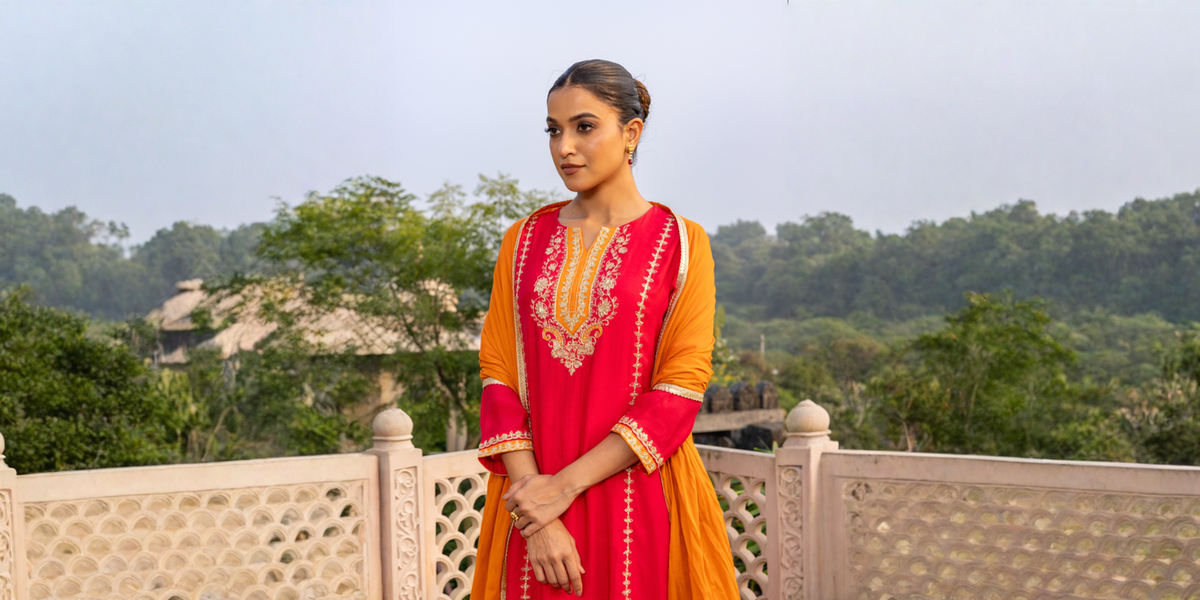
This is the natural home of Mul Chanderi. A festive Mul Chanderi suit set with hand embroidery or gota detailing, in a deep, saturated colour, worn with a matching or contrasting dupatta. This is the format that shows the fabric at its fullest.

The Myesha Yellow Mul Chanderi Handwork Set and the Navika Peach Mul Chanderi Handwork Set show how handwork sits on Mul Chanderi. The embroidery is precise and detailed. The fabric holds it cleanly. The overall silhouette stays soft and wearable through however long the celebration runs. The Sadhana Mul Chanderi Festive Suit Set and the Jeevika Mul Chanderi Festive Suit Set push further into full festive territory. Complete three-piece sets with the embellishment and colour depth that a Diwali dinner or Navratri evening calls for.
For festive occasions: rich colours, considered embellishment, a dupatta that adds weight to the look without adding weight to the body.
Wedding Functions and Ceremonies
Mul Chanderi works particularly well for the daytime and mid-tier wedding occasions that make up most of an Indian wedding calendar: the mehendi, the haldi, the morning sangeet, the intimate family lunch. These occasions call for something that reads properly festive without competing with the primary event or with the heavier outfits worn later.

A Mul Chanderi salwar suit in a wedding-appropriate colour, the Ritika Mul Chanderi Festive Suit Set in its complete three-piece format, or the Divija Mul Chanderi Embroidered Salwar Suit Set with its detailed embroidery, all land in this register well. You look fully dressed. You are comfortable through a full day of function. The fabric photographs beautifully, which matters when every wedding function now comes with a photographer.
For evening receptions: lean into the richer pieces with embroidery and deeper colours. The Kairavi Mul Chanderi Embroidered Suit Set and the Purnima Mul Chanderi Embroidered Suit Set are both designed to carry an evening reception with ease.
Casual Festive Events and Cultural Outings

The Navya Mul Chanderi Dual-Tone Salwar Set and the Saanjh Mul Chanderi Angrakha Kurta Set sit in a very useful middle zone: more dressed than everyday but less formal than a full festive suit. These are the pieces for a cultural evening, a gallery opening, a casual Diwali party with friends, an office celebration. The Chanderi co ord set is also strong in this category. The Rishma Roman Chanderi Embroidered Co-ord Set gives a complete, coordinated look with the ease of a two-piece format. You look like you made an effort without having made an enormous one.
Styling a Mul Chanderi Suit Set: What Works
Mul chanderi is an easy fabric to over-style. The sheen and drape are already doing significant visual work, so loading the outfit with accessories tends to compete rather than complement. Here is how we think about completing a mul chanderi look.
Jewellery. The fabric's natural lustre reads best alongside polki, kundan, or oxidised silver rather than heavy stone or high-gloss gold. The warm, soft sheen of mul chanderi pairs with jewellery that has texture and depth rather than flat brilliance. Jhumkas, layered chains, and cuff bangles in gold or oxidised finishes all work well. For heavily embroidered pieces, let the embroidery carry the surface detail and keep the jewellery simpler.
Dupatta draping. A mul chanderi dupatta drapes differently from a heavier fabric. Because it is so light, single-shoulder or one-side pin draping styles work better than styles that require the dupatta to hold its own weight. The fabric moves freely, which is an asset. A mul chanderi dupatta in motion photographs beautifully and moves gracefully through a long occasion. For embroidered suit sets, a plain or lightly bordered dupatta in a contrasting colour lets the kurta remain the focal point.
Footwear. Traditional embroidered juttis or block-heeled sandals work across the range of occasions mul chanderi suits. For casual and everyday wear, flat juttis or simple kolhapuris in tan or metallic finishes suit lighter mul chanderi sets well. For festive and wedding occasions, embroidered or mirror-work juttis or kitten-heeled sandals elevate the look appropriately.
Makeup. Mul chanderi is a fabric that carries its own finish. The natural sheen is itself a styling element. A clean, dewy base with a single accent, either a defined eye or a strong lip, almost always reads better than full glam alongside an embroidered mul chanderi set. The two compete for the same visual space.
Bag. A small potli bag or an embroidered clutch in matching or complementary fabric reads well with mul chanderi suit sets for festive occasions. For everyday and semi-casual wear, a simple tan leather sling or structured tote balances the delicacy of the fabric without overwhelming it.
How to Care for Mul Chanderi
The practical reality of loving a fine fabric is that you have to care for it properly. Mul Chanderi is more straightforward than most people expect, but it does have preferences.
-
Heavily embroidered pieces should go to a good dry cleaner. The embellishment, more than the fabric itself, needs the professional handling.
-
Lighter, unembellished Mul Chanderi can be hand washed gently in cold water with a mild detergent. Handle it with care. Press out excess water rather than wringing.
-
Dry in shade. Direct sunlight fades the sheen and can alter the colour over time.
-
Steam press rather than iron directly. If using an iron, keep the heat low and place a clean cotton cloth between the iron and the fabric.
-
Store folded in muslin or soft cotton cloth. Plastic storage bags trap moisture, which damages the fabric over time.
A Mul Chanderi suit set that is well cared for holds its shape, its colour, and its sheen across years of wear. These are pieces that are meant to last.
Frequently Asked Questions About Mul Chanderi Fabric
What is mul chanderi fabric made from?
Mul chanderi is a handwoven silk-and-cotton blend fabric from Chanderi, Madhya Pradesh. It uses a silk warp with a cotton or viscose weft structured in an open mulmul-style weave, which gives it its signature lightness, soft sheen, and flowing drape. At Vannya B, mul chanderi is central to our festive and occasion wear collections because this combination of properties works better than most alternatives for Indian climate and Indian celebration schedules.
What is the difference between mul chanderi and regular chanderi?
Mul chanderi is lighter and more breathable than regular chanderi because it uses a more open, mulmul-inspired weave structure. Regular chanderi uses a closer weave and feels slightly crisper. For all-day occasion wear in Indian weather, mul chanderi is the more comfortable choice. Regular chanderi holds more structure, which suits silhouettes where you want the fabric to carry its own body rather than drape softly.
Does mul chanderi hold embroidery well?
Mul chanderi holds embroidery exceptionally well, which is one of the primary reasons designers working in festive ethnic wear choose it. The fabric accepts thread work, gota patti, and hand embroidery without puckering or going rigid, and continues to drape softly after embellishment. Heavier festive fabrics often lose their drape once embroidered. Mul chanderi retains both the embroidery detail and its characteristic softness simultaneously.
Is Mul Chanderi suitable for summer in India?
It is one of the best options available for summer ethnic wear. The open weave allows air circulation, the light weight keeps the thermal load low, and it dries faster than most festive fabric alternatives. A Mul Chanderi kurta set for women in a lighter shade works well for summer weddings, morning pujas, and daytime family occasions even through peak heat months.
Can Mul Chanderi be worn to weddings?
A Mul Chanderi salwar suit or a complete three-piece festive suit set in Mul Chanderi is very well suited to wedding functions, particularly the daytime and mid-tier ceremonies. For evening receptions, choosing a more embellished Mul Chanderi set adds the richness the occasion calls for while keeping the outfit comfortable across a long evening.
What occasions is a Chanderi co ord set suitable for?
A Chanderi co ord set works across a genuinely wide range, from casual festive gatherings and cultural events to office Diwali celebrations and relaxed family occasions. The two-piece format gives the ease of separates with the polished look of a coordinated outfit. The fabric's natural sheen ensures the look reads as intentional and put-together even in a relaxed silhouette.
Why The Mul Chanderi Fabric Stays in Our Collection
Mul Chanderi has been woven in Chanderi for centuries, and it has lasted because it solves a real problem rather than a fashion one. Indian women need fabric that is beautiful enough for their celebrations and practical enough for the climate and the duration those celebrations actually involve.
At Vannya B, we choose Mul Chanderi because our design values are built around the same problem. We want our pieces to carry you through the full occasion, from the first hour of the puja to the last song of the sangeet, without the fabric becoming something you have to manage. When a fabric makes that easy, you keep coming back to it. That is exactly what Mul Chanderi does for us, and exactly what it can do for your wardrobe.