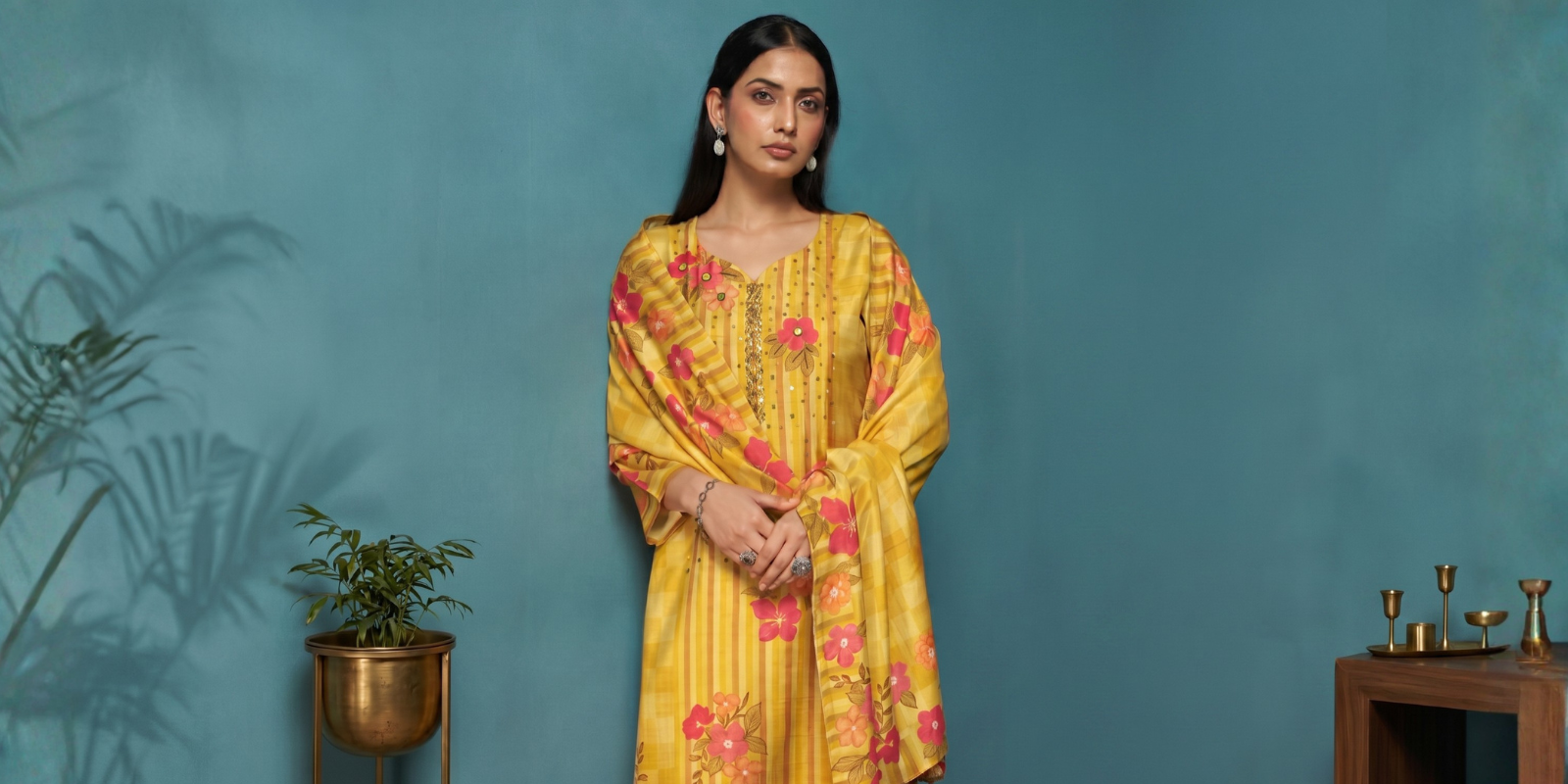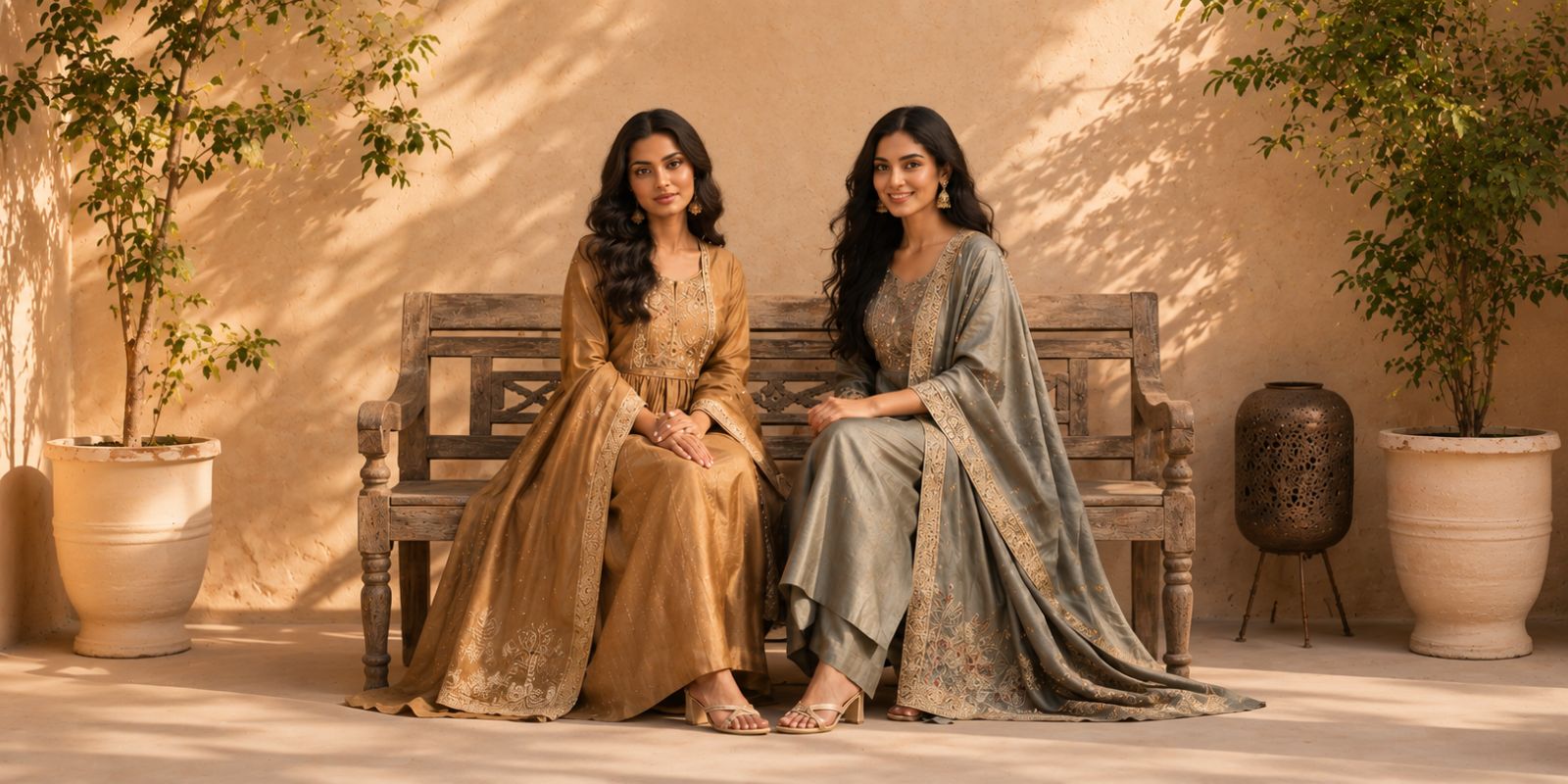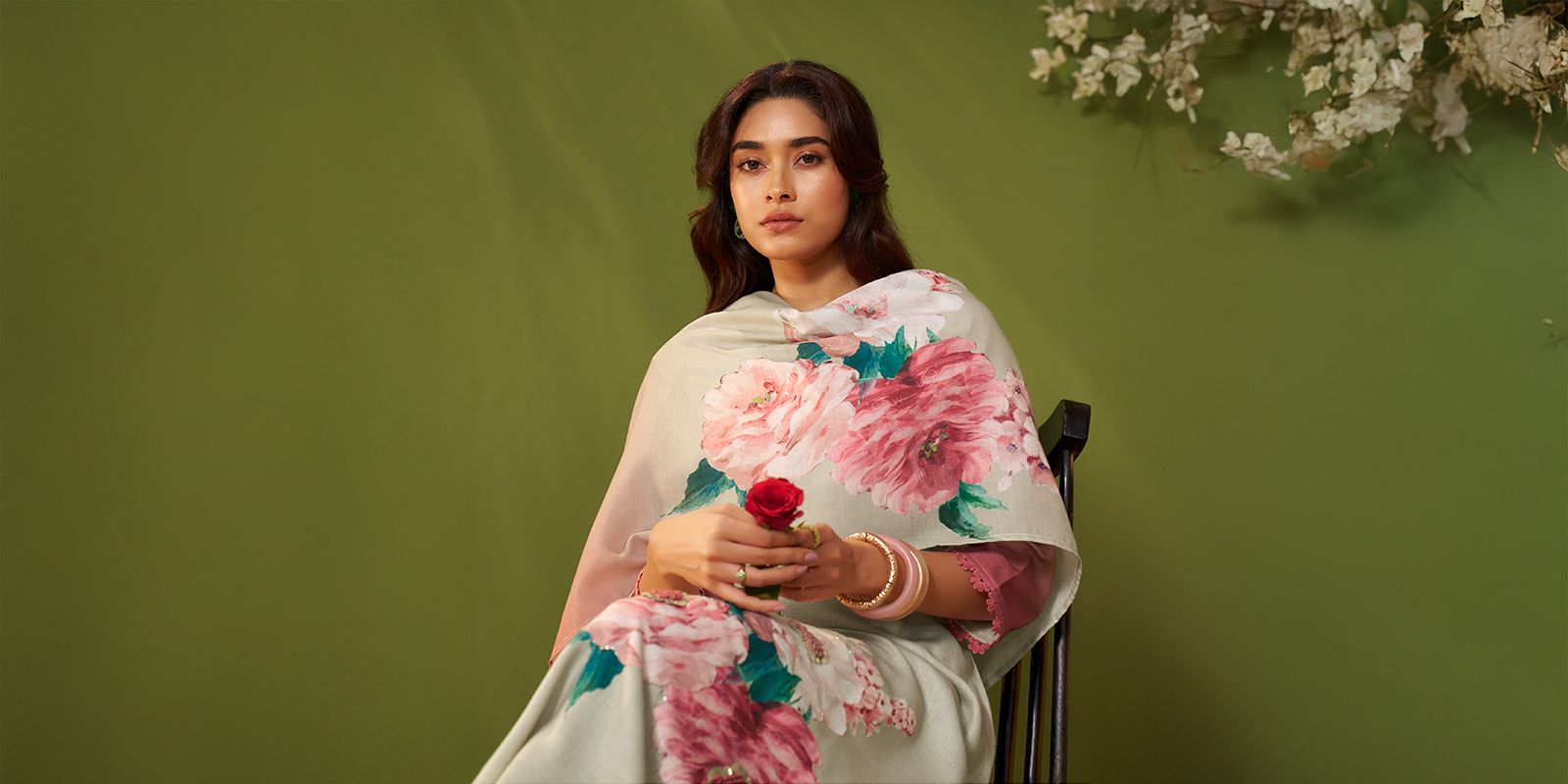
Indian Ethnic Wear For Ladies Who Wear Ethnic Every Single Day
Monday kurta. Tuesday kurta. Wednesday kurta. At some point, even a woman who genuinely loves ethnic wear starts opening her wardrobe and feeling nothing. The outfits are all there. The problem is that they all feel like the same outfit.
This happens to every woman who wears Indian ethnic wear for ladies daily, and it has a straightforward fix. The problem is almost never the wardrobe. It is how the wardrobe is built, which fabrics are in it, and whether the pieces were bought with daily wear in mind or with occasions in mind.
Those are two completely different wardrobes. Most women are trying to live in the second one.
Why Indian Ethnic Wear For Ladies Needs A Completely Different Approach
Most styling advice treats ethnic wear like a costume. You pull it out for occasions. You style it to a theme. You return it to the shelf until the next event.
For women who wear ethnic daily, this logic fails. You are dressing the way a French woman dresses in separates or the way a New Yorker builds around a good blazer. You are building a wardrobe with intention, where each piece works in rotation, earns its place, and can be restyled without looking like a repeat.
That changes everything about how you buy, what fabrics you choose, and how you think about silhouettes.
The biggest mistakes daily ethnic dressers make:
-
Buying pieces that are too occasion-specific (heavily embellished suits that feel out of place on a regular Thursday)
-
Ignoring fabric entirely and then wondering why everything feels uncomfortable by noon
-
Shopping by colour alone and ending up with a wardrobe where nothing mixes
-
Collecting many outfits but very few that can be restyled in more than one way
The woman who wears ethnic daily needs a wardrobe built around wearability, versatility, and what we call outfit intelligence: pieces that look deliberate without requiring deliberate effort.
The Fabric Question: Why It Matters More For Daily Wear
Fabric is where most people underestimate ethnic wear. For occasional wear, you can tolerate a stiff dupatta or a fabric that needs pressing every single time. For daily wear, fabric is everything.
The fabrics that survive daily wear with grace are the ones that breathe, drape well, and age without looking tired.
Mul chanderi sits at the top of this list. It is a weave from Madhya Pradesh: lightweight, slightly crisp at first, then progressively softer with every wash. It is breathable in a way that synthetic fabrics simply are unable to match. It diffuses heat rather than trapping it. A mul chanderi suit in June is survivable in a way that georgette rarely is.

Natural crepe is less talked about but equally practical. It has a natural drape that flatters without structure, so you can sit, move, and go through your whole day without thinking about how you look. It wrinkles less than chanderi, which matters if your day involves long hours at a desk or in a car. The Nitya Natural Crepe Festive Suit Set from Vannya B demonstrates this well: the fabric does the work, so the styling stays low effort.
Linen is the most honest fabric for summer days. It wrinkles, yes, but in the right direction. A linen suit in the afternoon looks lived-in, and that is a quality, depending on how you see it.
Viscose chanderi sits between chanderi and crepe in weight and texture. It is a touch richer than regular chanderi, which means it reads as slightly more dressed up without being heavy.
The point is to shop with one question: will this fabric still feel good at 4 PM?
Simple Salwar Suit For Daily Use: Reframing What "Simple" Means
There is a certain dismissiveness in how people use the word simple when it comes to Indian clothing. Simple gets treated like a compromise. A placeholder. Something you wear until you can afford something better.
The women who dress best in ethnic wear every day understand that a simple salwar suit for daily use is actually the hardest thing to get right. Simple without looking plain. Uncomplicated without looking low effort.
The secret is in where the design work is placed. A well-cut suit with a beautiful fabric and one well-chosen detail, a pintuck yoke, a hand-printed border, a contrast dupatta colour, looks more considered than a heavily embellished piece that tries too hard.
For daily wear, the simple salwar suit formula works best when:
-
The fabric has natural texture (chanderi, linen, crepe) so it carries visual interest without pattern
-
The fit is tailored but fluid. Salwar suits that are too fitted feel constricting through a full day. Those with relaxed cuts allow real movement.
-
The dupatta is usable. Long, stiff dupattas that need constant pinning are a daily wear problem. A lightweight mul chanderi or crepe dupatta that can be draped and forgotten is what you want.
-
The colour palette is wearable, which brings us to the next section.
Pastel Ethnic Wear: The Daily Wear Palette That Actually Works

There is a reason pastel ethnic wear has quietly taken over the wardrobes of women who dress ethnic regularly. It is a logical response to a practical problem, and the women who figured it out did so years before it became a trend.
Deep colours and heavy prints demand more attention. They are harder to mix with accessories. Pastels carry a quiet authority: they are visually calm, which means they work anywhere from a school drop-off to a board meeting without feeling wrong for the context.
The pastel range that works hardest for daily ethnic dressers:
-
Soft sage and pistachio greens: Works with gold, copper, and silver accessories equally well. Never feels too bridal or too casual.
-
Dusty rose and mauve: These sit differently from bright pink. They are feminine without being loud.
-
Powder blue and slate: These shades pair beautifully with white or cream dupattas and require very little accessory planning.
-
Off-white and warm ivory: The Komal White Mul Chanderi Suit Set uses an ivory-adjacent white that works in almost every context. Off-whites are easier to wear than stark white and tend to look more intentional.
-
Pale lavender and lilac: Extremely versatile for South Indian wardrobes especially, since these shades traditionally read as festive but look completely at home in a daily context.
Pastels work best in natural fabrics. A pastel in polyester feels washed out. A pastel in mul chanderi or natural crepe has depth because the fabric itself carries texture.
One styling decision that makes pastel ethnic wear look sharper: go tonal. A dusty rose top with a slightly deeper mauve dupatta looks put-together in a way that a mismatched combination rarely does.
Co Ord Set For Daily Use: The Argument For Wearing Sets
The conversation around a co ord set for daily use is still catching up to reality. Women who have already shifted to coord sets for ethnic dressing will tell you plainly: this is the most practical format in Indian ethnic wear.
Why? Because a coord set removes the decision fatigue. The matching is done. The proportions are already worked out. All you choose is your accessories and footwear.

For daily wear specifically, a coord set in natural crepe or linen is hard to beat. The Sharmila Linen V-Neck Co-ord Set is designed to look complete without extra effort. You put them on and they look like you have thought about it.
Co ord sets for daily use also offer something suit sets occasionally do without: the freedom to separate the pieces. Wear the top with your own palazzo. Pair the pants with a plain kurta from last season. A well-made coord set gives you options beyond the single look.
What to look for in a daily-wear coord set:
-
Clean silhouettes over complex embroidery (embroidery snags, fades, and ages faster with regular washing)
-
Elastic or drawstring waistbands over rigid stitched waists (comfort across a full day of activity)
-
Fabrics that hold their shape without ironing every single time
-
Prints that are small-scale or tonal, so they work in multiple contexts
How To Style Ethnic Wear So You Always Look Different
This is the real problem for daily ethnic dressers. The outfits are there. The question is how to style ethnic wear in a way that keeps them feeling new.
The answer is in systematically changing one variable at a time.
The dupatta as a reset button
More than any other piece in an ethnic outfit, the dupatta controls the mood. A printed dupatta on a plain suit makes it festive. A plain cotton dupatta on a heavily printed suit makes it casual. Swapping dupattas across suits is the fastest way to create what feels like a new outfit from pieces you already own.
Accessories as a tone shift
Oxidised silver earrings with a pastel suit read as bohemian. Gold jhumkas with the same suit read as traditional. A slim watch and small studs read as clean and professional. The outfit stays the same. The message changes completely.
The footwear decision
Kolhapuris make ethnic wear grounded and earthy. Heeled mules make it slightly formal. White sneakers make it casual in a way that many women are still nervous about but absolutely should try. The Riana White Linen Floral Printed Set with white sneakers is a combination that works completely.
Hair as a styling element
A bun reads as effortless and put together. Open hair with ethnic wear has a softer quality. A loose braid works between both. Women who wear ethnic daily know that hairstyle does more for the overall look than most accessories.
White Printed Salwar Suit: The One Piece Worth Owning In Multiples
If there is one purchase that repays itself many times over for daily ethnic dressers, it is a white printed salwar suit.
White in ethnic wear feels counterintuitive for daily use. It actually works better than most people expect, especially in prints. Printed white suits have visual interest that makes small stains far less visible than on plain pastels. The Zoya White Natural Crepe Salwar Set and the Komal White Mul Chanderi Suit Set both demonstrate this: the fabric and cut give them enough personality that they work across multiple contexts without looking repetitive.

White printed salwar suits also mix with nearly everything. A white base pairs with jade, mustard, coral, and navy dupattas equally well. If you are building a daily-wear ethnic wardrobe from scratch, a white printed suit is worth buying before almost anything else.
One practical note: mul chanderi and natural crepe whites are far easier to maintain than silk or georgette whites. They handle regular washing without yellowing quickly.
Casual Ethnic Wear For Women: What The Category Actually Means
Casual ethnic wear for women gets conflated with "boring" or "basic" ethnic wear, and that framing is wrong.
Casual in ethnic wear means wearable without ceremony. Pieces that require zero special occasion to justify putting on. Outfits that move with your life instead of asking your life to move around them.
The best casual ethnic pieces have these qualities:
-
Fabric that is comfortable across different seasons and temperatures
-
Silhouettes that allow real movement (sitting cross-legged, getting in and out of autos, carrying bags and children)
-
Colours and prints that work with whatever accessories you already own
-
Care instructions that are manageable at home, every week

Casual ethnic wear is where Vannya B's linen suits and natural crepe coord sets live most comfortably. The Gulabo Grey Linen Mul Suit Set, for instance, works as a relaxed daily wear piece and as a smart casual option for daytime social occasions. It moves between contexts without needing a costume change.
Building A Daily Ethnic Wardrobe From Scratch: Where To Start
If you are starting over or starting fresh, here is an order of priority that makes practical sense.
Start with fabric anchors. Two or three suits in mul chanderi or natural crepe in neutral or pastel shades. These become the base of everything.
Add one coord set. A daily-use coord set in linen or crepe gives you a guaranteed put-together option for days when decision fatigue is highest.
Then add one printed piece. A white printed salwar suit or a bold printed coord set. This is your contrast piece, the one that stands out on days when you want to be noticed.
Invest in dupattas separately. Buying additional dupattas in different weights and colours is the least expensive way to multiply what you already own. A single suit worn with three different dupattas reads as three different outfits.
Build accessories slowly and deliberately. One good pair of oxidised earrings, one pair of jhumkas, one neutral pair of footwear. Ethnic wardrobes are ruined by too many accessories competing with each other.
Questions Women Who Wear Ethnic Daily Actually Ask
Which fabric is best for daily ethnic wear in Indian summers?
Mul chanderi is the strongest answer for summer. It is lightweight, breathable, and gets softer with every wash rather than losing its shape. Natural crepe is a close second for women who prefer less drape and more structure. Linen works well for dry-heat climates. All three survive daily wear and weekly home washing far better than georgette or silk.
How many ethnic suits do I need for daily wear?
Seven to ten pieces is a functional daily-wear wardrobe, assuming you wash and rotate regularly. The number matters less than the mix: three or four solid or tonal pieces in neutral shades, two or three printed or pastel pieces, one coord set, and a couple of well-chosen dupattas that work across multiple outfits.
Can I wear a co ord set to work every day?
Yes, provided the fabric is appropriate and the silhouette reads as put-together. A natural crepe or linen coord set in a solid or subtle print works for most work environments. The Nandini Natural Crepe Printed Co-ord Set and the Sharmila Linen V-Neck Co-ord Set both sit comfortably in professional contexts without looking overdressed.
What is the easiest ethnic outfit to style for daily wear?
A simple salwar suit in a natural fabric with a lightweight dupatta. No accessory planning required, no colour-matching anxiety. A white or pastel suit in mul chanderi with a contrasting dupatta is the closest thing to a daily ethnic uniform that still looks considered.
How do I stop my ethnic wardrobe from feeling repetitive?
The dupatta is the fastest reset. Swapping dupattas across suits produces what feels like a new outfit without buying anything. Beyond that, changing one variable at a time, footwear one day, accessories the next, hairstyle the day after, keeps the same ten pieces feeling different across a full month of wear.
How do I keep ethnic wear looking fresh when I wear it every day?
Rotate across at least seven pieces so each outfit gets four to five days of rest between wears. Store suits folded rather than hung to preserve fabric weight. Wash dupattas separately since they carry most of the fragrance from a full day. A fabric steamer removes wrinkles in ten minutes without the heat damage that regular ironing causes over time across a good chanderi or crepe piece.
What Daily Ethnic Wear Actually Says About You
This is the part nobody writes about.
Women who wear Indian ethnic wear every day, by choice, in 2026, are making a statement that has nothing to do with fashion. They are saying that comfort and identity belong together. That looking put together does require borrowing someone else's aesthetic. That there is something worth preserving in the way Indian women have dressed for centuries, and it can coexist with a laptop, a commute, and a full calendar.
The women who wear ethnic daily and look effortless at it have figured out something that takes most people years to learn: personal style is built from clarity, built from knowing what you want and editing out everything else.
Know what your body likes. Know what fabrics work in your climate. Know your own colours.
Every piece at Vannya B is designed with that woman in mind. The woman who loves ethnic wear too much to save it only for occasions. The woman who has decided that Tuesday is reason enough.
Shop the collection at vannyab.com and find the pieces that make every day feel considered.